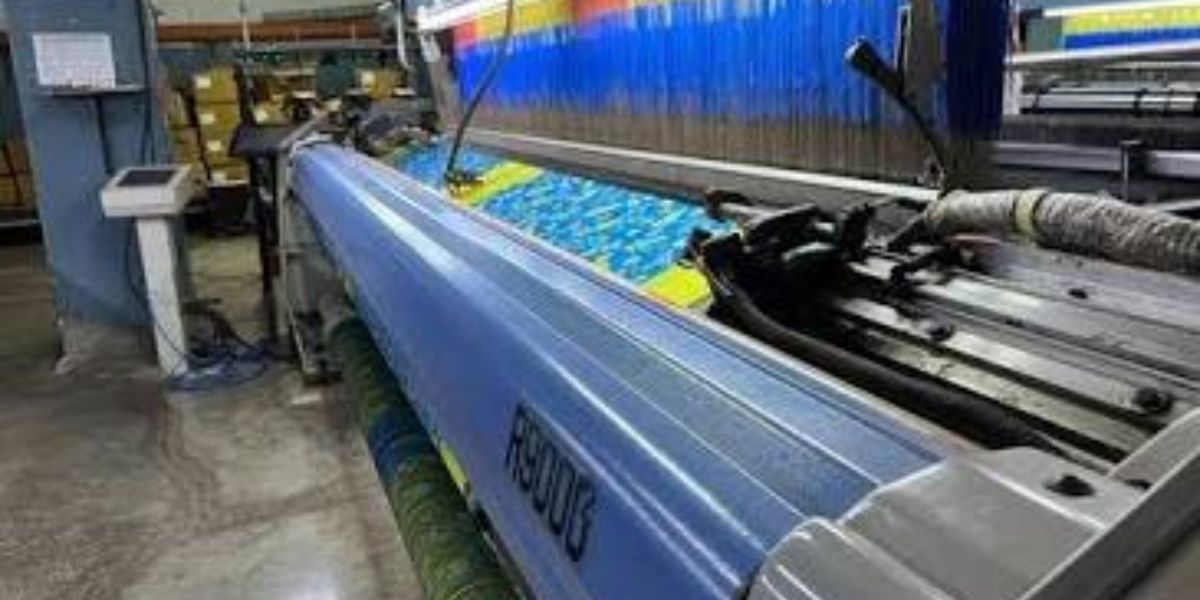
The saree remains one of the most culturally resilient and commercially lucrative apparel segments in the Indian textile ecosystem. With India’s ethnic wear market expanding rapidly, learning how to start a saree manufacturing business in India offers high long-term returns for industrial entrepreneurs. Unlike retail or white-labeling, owning a manufacturing plant allows you to control thread count quality, pattern intellectual property, fabric blend costs, and ex-factory pricing margins.
However, running a profitable weaving unit requires far more than basic apparel knowledge—it demands precise machinery selection, yarn procurement strategies, power load calculations, and deep cluster dynamics. This step-by-step guide breaks down the operational blueprint, machinery setup costs, factory layout requirements, business planning, and B2B distribution models needed to build a successful saree manufacturing unit in India.
1. Indian Saree Market Size & Saree Manufacturing Profit
India’s saree industry accounts for a major share of the country’s ethnic wear segment, generating tens of thousands of crores annually. The market spans daily synthetic wear, semi-formal cotton/viscose blends, and high-end bridal silk weaves incorporating genuine metallic zari.
Metric / Aspect | Industry Standard Estimate (India) |
|---|---|
Total Annual Industry Market Size | ₹50,000+ Crore ($6+ Billion USD) |
Average Loom Space Requirement | 2,000 sq. ft. (Micro) to 15,000+ sq. ft. (Commercial) |
Average Setup Investment | ₹25 Lakhs – ₹1.5+ Crore (Depending on loom technology) |
Saree Manufacturing Profit Margins | 18% to 35% net profit margin (up to 45% on specialised Jacquard designs) |
Typical Payback Period (ROI) | 2.5 to 4 Years |
Because sarees are a standard 5.5-meter to 6.3-meter unstitched fabric (including the blouse piece), manufacturing eliminates complex multi-size garment pattern cutting and variable sizing inventory risks. This structural stability streamlines production and simplifies inventory management.
2. Choosing Your Niche & Loom Technology
Selecting your raw material focus dictates the machinery specs, atmospheric requirements, and yarn processing equipment required for your manufacturing plant.
A. Synthetic & Art-Silk Sarees (Poly-Georgette, Chiffon, Crepe)
- Manufacturing Hub: Surat (Gujarat).
- Loom Requirement: High-speed Water Jet or Air Jet looms paired with high-hook electronic Jacquards.
- Commercial Viability: High-volume, low-margin, rapid production cycles catering to mass-market daily wear.
B. Pure Cotton, Mulmul & Linen Sarees
- Manufacturing Hub: Coimbatore, Salem, Bengal clusters (Shantipur/Phulia), Chanderi.
- Loom Requirement: Shuttleless Rapier looms or modified automatic power looms equipped with sizing and warping units.
- Commercial Viability: Year-round steady demand, lower raw material volatility, high suburban penetration.
C. Pure Silk & Heavy Bridal Jacquards (Kanchipuram, Banarasi, Paithani)
- Manufacturing Hub: Kanchipuram, Varanasi, Bengaluru, Yeola.
- Loom Requirement: Advanced Rapier looms featuring 2400 to 4800-hook Electronic Jacquard attachments or semi-automatic handloom hybrids.
- Commercial Viability: Low volume, high margin (30% to 50%+), high initial capital commitment per kilogram of raw silk warp.
D. Value-Added & Designer Sarees
- Manufacturing Hub: Metro production belts (Surat, Delhi-NCR, Kolkata).
- Setup Requirement: Base weaving setup integrated with multi-head computerised embroidery machines, digital textile printing units, or stone-fixing apparatus.
3. Saree Manufacturing Process & Workflow
Transforming raw yarn into a packaged 6.3-meter saree follows a strict sequence of industrial steps:
- Yarn Procurement & Inspection: Sourcing continuous filament yarn, spun yarn, or silk hanks. Testing yarn count, tensile strength, and twist per inch (TPI).
- Hank / Cone Dyeing: Submerging yarns in high-temperature dyeing vats or cone-dyeing machines to achieve precise Pantone colour fastness.
- Warping (Tanabana Preparation): Sectional warping machines wind hundreds of parallel yarn ends onto a weaver’s beam under controlled tension.
- CAD Design & Card Punching / Digital Upload: Textile CAD software (e.g., TexCAD, NedGraphics) creates complex border and pallu matrix patterns. These files are converted into electronic Jacquard files (`.bmp` / `.ep`) or traditional perforated Jacquard cards.
- Weaving on Looms: Interlacing warp (longitudinal) and weft (transverse) yarns. Electronic Jacquards control individual warp threads to weave complex floral, geometric, or traditional motifs automatically.
- Value Addition (Post-Weaving Processing):
- Calendering / Washing: Passing grey fabric through heated rollers to give silk or synthetic fabric a smooth, glossy finish.
- Embroidery & Printing: Applying Schiffli embroidery, digital pigment prints, or foil work.
- Cutting, Folding & Quality Inspection: Trimming loose warp threads, measuring standard 6.3m lengths (5.5m saree + 0.8m blouse piece), checking for weave defects under light tables, and moisture-barrier packaging.
4. Creating a Saree Manufacturing Business Project Report (DPR)
Before procuring machinery or leasing factory space, securing bank loans (such as PMEGP, Mudra, or State MSME loans) requires a professionally crafted Detailed Project Report (DPR). A comprehensive DPR includes technical machinery specifications, 5-year financial projections, cash flow statements, debt-service coverage ratio (DSCR), break-even analysis, and raw material procurement schedules.
Applying for a Bank Loan under MUDRA, PMEGP, or CGTMSE? Get a tailored project profile and financial projections built for your setup.
5. Factory Setup & Infrastructure Requirements
Textile weaving machinery requires precise environmental conditions to prevent yarn breakage and structural machinery wear.
- Floor Space Requirements:
- Micro Unit (4–6 Rapier Looms + Warping): Minimum 2,000 – 3,500 sq. ft. of clear-span industrial space.
- Commercial Plant (12–20 High-Speed Looms + Finishing): 8,000 – 15,000+ sq. ft. clear-span shed.
- Ceiling Height Clearance: Looms with top-mounted Electronic Jacquard gantries require a minimum roof eave height of 16 to 18 feet.
- Industrial Power & HT Connection: Continuous load capacity ranging from 35 HP (Micro) to 150+ HP (Commercial). High-Tension (HT) lines paired with heavy-duty Diesel Generator (DG) backstops are essential to prevent mid-pattern loom halts that cause fabric stop-marks.
- Humidification Plant (RH Control): Weaving pure silk or fine cotton requires controlled relative humidity (65% to 75% RH) to preserve yarn moisture and prevent static-induced warp snapping. Installing atomising nozzles or ducts is mandatory in dry regions.
6. Saree Manufacturing Business Cost & Machinery
Understanding the full saree manufacturing cost structure helps prevent budget overruns. The investment required for building a saree weaving plant varies according to loom automation levels and total saree manufacturing machinery requirements:
Machinery & Setup Element | Micro Setup (4-6 Looms) | Commercial Plant (12-16 Looms) |
|---|---|---|
Primary Saree Manufacturing Machinery (Rapier / Air Jet with Electronic Jacquard) | ₹16,00,000 – ₹26,00,000 | ₹60,00,000 – ₹1,20,00,000 |
Pre-Weaving Setup (Sectional Warping & Cone Winders) | ₹3,50,000 – ₹6,00,000 | ₹12,00,000 – ₹25,00,000 |
Humidification & Electrical HT Transformer Setup | ₹2,50,000 – ₹4,50,000 | ₹8,00,000 – ₹18,00,000 |
DG Power Backup (62.5 kVA – 125 kVA) | ₹3,80,000 – ₹5,50,000 | ₹8,50,000 – ₹14,00,000 |
Working Capital (Raw Yarn, Dyes, Payroll reserve) | ₹5,00,000 – ₹10,00,000 | ₹25,00,000 – ₹50,00,000 |
Estimated Total Saree Manufacturing Cost Outlay | ₹30.8 Lakhs – ₹52 Lakhs | ₹1.13 Crore – ₹2.27 Crore |
7. Sourcing Raw Materials & Managing Supply Chains
Saree manufacturing profit margins depend heavily on securing quality warp and weft yarn directly from primary spinning mills or official statutory boards:
- Raw Silk: Source mulberry silk yarn from Silk Board-certified reelers in Karnataka (Ramanagara market), Kanchipuram, or imported grade-5A silk for smooth, uniform warp. For authentic silk verification standards, visit the official Central Silk Board / Silk Mark Organisation of India.
- Cotton & Viscose Spun Yarn: Procure directly from spinning mills in Coimbatore, Tirupur, Gujarat, or Bhiwandi. Specify combed yarn counts (e.g., 60s, 80s, 100s, 120s count depending on fabric fineness).
- Zari (Metallic Thread): Procure tested Real Silver Zari or Half-Fine/Imitation Zari directly from specialised manufacturers in Surat or Kanchipuram. Ensure oxidation-resistant coating specifications.
- Dyes & Auxiliary Chemicals: Buy GOTS-certified eco-friendly reactive dyes, direct dyes, or acid dyes from authorised distributor networks to prevent AZO-compound compliance failures during export sampling.
8. Government Schemes, Subsidies & Legal Approvals
Textile manufacturing enjoys robust backing from both Central and State governments in India:
- Government Subsidy Schemes:
- SAMARTH Scheme: Grants for skill advancement training of loom operators and weavers.
- State Textile Policies: Major textile-producing states (Gujarat, Maharashtra, Tamil Nadu, Uttar Pradesh, Madhya Pradesh) offer 10% to 25% capital credit-linked subsidies on machinery purchases, interest subvention on long-term loans (3% to 7%), and power tariff rebates per unit of electricity consumed.
- PLI Scheme for Textiles: Applicable for large-scale investments in man-made fiber (MMF) saree production.
- Mandatory Legal Approvals Checklist:
- Business Entity Setup (Pvt Ltd, LLP, or Partnership Firm).
- Udyam MSME Registration (Mandatory for government subsidy access).
- GST Registration (Standard textile slab rates for fabric and yarn).
- Factory License & Fire Department NOC (Required for industrial sheds operating heavy motor loads).
- State Pollution Control Board (SPCB) Consent to Establish/Operate (CTE/CTO)—especially critical if running in-house yarn dyeing vats with ETP (Effluent Treatment Plant) setups.
- Silk Mark & Handloom Mark Accreditation: Issued by the Silk Mark Organisation of India (SMOI) for authenticating pure silk products.
9. B2B Sales, Distribution Strategy & Export Opportunities
Manufacturers rarely sell directly to end retail consumers initially; B2B wholesale networks form the foundation of early volume sales:
- Primary Wholesale Saree Markets: Establish agency relationships or trade counters in key regional hub centres:
- Surat (Ring Road Market, Zampa Bazaar)
- Delhi (Chandni Chowk)
- Kolkata (Burrabazar)
- Bengaluru (Chickpet)
- Varanasi (Chowk area)
- Contract Manufacturing (Job Work): Provide white-label manufacturing capacity for national D2C ethnic fashion brands, corporate retail chains, and regional saree showroom networks.
- B2B Platforms & Direct Showroom Supply: Supply catalogue collections to regional retail chains via structured B2B trade shows (e.g., National Garment Fair, Textile India).
- Export Channels: Register with the Apparel Export Promotion Council (AEPC) or the Synthetic & Rayon Textiles Export Promotion Council (SRTEPC) to target Indian diaspora markets across the UAE, USA, UK, Singapore, Malaysia, and Sri Lanka.
10. Common Operational Challenges & Mitigation Strategies
A. Yarn Price Volatility
Natural raw silk and cotton yarn prices fluctuate based on crop yields and global trade shifts.
- Solution: Maintain a 45-day raw yarn inventory buffer. Secure long-term forward supply contracts with spinning mills when yarn spot prices hit seasonal lows.
B. Loom Weaver Skill Shortages
Operating electronic Jacquards and computerised Rapier looms requires specialised technician skills, not traditional manual weaving techniques.
- Solution: Partner with local ITIs (Industrial Training Institutes) under the SAMARTH scheme to train dedicated in-house loom masters, warp tyers, and card tuners on long-term employment contracts.
C. Mid-Pattern Power Interruptions
A sudden power grid flicker causes automatic looms to stop instantly, creating a visible horizontal bar defect (stop-mark) across high-end saree fabric.
- Solution: Install automated line-interactive Online UPS systems paired with fast-auto-start DG sets to bridge the 15-second gap during mains power failures seamlessly.
Frequently Asked Questions (FAQs)
1. How much investment is needed for a saree manufacturing setup in India?
A micro-scale setup with 4 to 6 Rapier looms requires around ₹30 Lakhs to ₹50 Lakhs, while a full commercial weaving plant with 12 to 16 high-speed looms and Electronic Jacquards requires between ₹1.1 Crore and ₹2.25 Crores.
2. What is the average saree manufacturing profit margin?
Ex-factory net profit margins typically range between 18% and 35%. High-end silk Jacquard sarees or value-added designer sarees with embroidery can yield net profit margins up to 45%.
3. Which loom is best for synthetic vs silk saree manufacturing?
High-speed Water Jet or Air Jet looms are ideal for synthetic sarees (like poly-georgette and chiffon) due to mass-production speed. For pure silk and complex Jacquard designs, shuttleless Rapier looms with 2400 to 4800-hook Electronic Jacquards are recommended.
4. Are there government subsidies available for saree manufacturing units?
Yes. Central and State Textile Policies offer 10% to 25% capital investment subsidies, interest subvention on term loans, power tariff rebates, and operator training support under schemes like SAMARTH and state-specific MSME initiatives.
Conclusion
Learning how to start a saree manufacturing business in India requires a solid grasp of textile engineering, capital investment in modern loom technologies, and an established wholesale supply network. By targeting the right fabric niche, securing state textile equipment subsidies, maintaining strict relative humidity on your plant floor, and aligning with major B2B wholesale clusters, your manufacturing plant can achieve steady production volumes and sustained long-term profitability.

Rupak Chakrabarty is the Founder and Lead Business Coach at MUVSI. With over two decades of experience in entrepreneurship, marketing, and business consulting, he helps aspiring entrepreneurs and MSMEs build profitable, market-driven businesses. His expertise includes business planning, B2B marketing, customer acquisition, and digital growth strategies.