
If you are looking to start a profitable business with consistent local demand and high expansion scope, starting a small-scale manufacturing unit under ₹1 Lakh in India is one of the most effective paths. With strong support from government initiatives like the Atmanirbhar Bharat push and PMEGP or Mudra loans, micro-manufacturing has become highly accessible for first-time entrepreneurs, tier-2 and tier-3 starters, and home-based setups.
In this guide, we break down the most practical manufacturing business ideas under 1 lakh Rupees with exact investment breakdowns, required machinery, operational space, and necessary government licenses.
Why Start a Small Manufacturing Business Under ₹1 Lakh?
Micro-scale industrial units offer key advantages over retail or trading businesses:
- Low Initial CapEx: Setup costs fit within the Mudra Shishu loan limit of up to ₹50,000 or personal savings.
- Domestic Resource Availability: Raw materials for cottage and micro units are sourced locally across India.
- Minimal Power & Space Rules: Most units under ₹1 Lakh operate on standard single-phase domestic power and require less than 300 sq. ft. of space.
- High Profit Margins: Manufacturing directly creates value, yielding 20% to 60% gross margins compared to 5% to 10% in trading.
Micro-Manufacturing Overview (Under ₹1 Lakh)
Business Idea | Investment Range | Minimum Space | Average Monthly Profit |
|---|---|---|---|
Candle Making | ₹20,000 – ₹45,000 | 150 – 200 sq. ft. | ₹15,000 – ₹30,000 |
Agarbatti Making | ₹35,000 – ₹65,000 | 200 – 250 sq. ft. | ₹18,000 – ₹35,000 |
Paper Plate Unit | ₹40,000 – ₹75,000 | 250 – 300 sq. ft. | ₹15,000 – ₹28,000 |
Handmade Soap | ₹25,000 – ₹50,000 | 150 sq. ft. | ₹20,000 – ₹45,000 |
Detergent Powder | ₹40,000 – ₹70,000 | 200 – 300 sq. ft. | ₹15,000 – ₹30,000 |
Pickle & Jam Unit | ₹30,000 – ₹60,000 | Home Kitchen / 200 sq. ft. | ₹18,000 – ₹35,000 |
Papad Making | ₹35,000 – ₹65,000 | 200 sq. ft. + Drying Area | ₹12,000 – ₹25,000 |
Jute Bag Stitching | ₹25,000 – ₹55,000 | 150 – 200 sq. ft. | ₹15,000 – ₹35,000 |
Noodle / Sewai Unit | ₹45,000 – ₹80,000 | 250 sq. ft. | ₹20,000 – ₹40,000 |
Potato Chips Unit | ₹40,000 – ₹75,000 | 250 – 300 sq. ft. | ₹20,000 – ₹45,000 |
Best Manufacturing Business Ideas Under 1 Lakh in India
1. Scented & Designer Candle Making

Candle manufacturing remains one of the lowest-risk manufacturing business ideas under 1 lakh in India. Shift away from plain white candles and focus on high-margin decorative, scented, and aromatherapy candles for festivals, hotels, spas, and gifting.
- Investment Breakdown: ₹20,000 – ₹45,000 (covers paraffin/soy wax, silicone moulds, fragrances, wicks, double boiler, and digital weighing scale).
- Space & Power Requirement: 150–200 sq. ft. (Can be operated from a home room or garage using standard domestic power).
- Raw Materials Needed: Paraffin wax, Soy wax, Essential oils, Braided cotton wicks, Dyes.
- Licenses Required: MSME Udyam Registration, Local Trade License.
- Profit Margin: 35% – 50% (Scented candle sets retailing at ₹300–₹600 yield significant margins).
2. Disposable Paper Plate & Bowl Unit
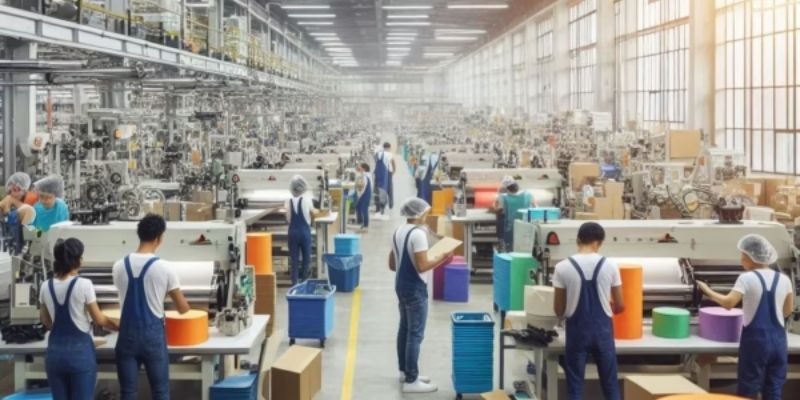
Paper plate making is one of the most in-demand manufacturing business ideas under 1 lakh in India, especially with the growing ban on plastic and the rise in disposable products used at parties, food stalls, religious events, and functions. With state-level bans on single-use plastic, paper plates, bowls, and thalis are heavily used by street food vendors, caterers, and event organisers.
- Investment Breakdown: ₹40,000 – ₹75,000 for a single-die hydraulic or motorised paper plate-making machine.
- Space & Electricity: 250 sq. ft. space; 1 HP to 2 HP single-phase power connection.
- Raw Materials Needed: PE-coated paper rolls, silver laminated paper rolls, cutting dies (6-inch to 12-inch).
- Licenses Required: Udyam Registration, State Pollution Control Board Clearance (categorised under the White Category—exempt from active Consent to Operate in most states).
- Profit Margin: ₹0.15 – ₹0.40 per plate. A small unit producing 3,000 plates daily generates a steady monthly profit of ₹15,000–₹28,000.
3. Agarbatti (Incense Stick) Manufacturing

Agarbatti making is a traditional yet fast-growing manufacturing business idea under 1 lakh in India. With strong domestic demand during religious ceremonies, meditation, and daily puja rituals, this business is simple, low-cost, and suitable for home-based operations.
- Investment Breakdown: ₹35,000 – ₹65,000 for a pedal-operated or basic semi-automatic incense-making machine + raw materials.
- Machine Specs: 0.5 HP to 1 HP motor operating on single-phase domestic power.
- Raw Materials Needed: Raw bamboo sticks, Charcoal powder, Jigat powder (binder), Fragrance oils (Sandalwood, Rose, Jasmine).
- Setup Steps:
- Blend charcoal, wood powder, and jigat powder with water into a uniform dough.
- Feed the dough and bamboo sticks into the machine to produce raw sticks.
- Dip dried sticks into fragrance mixtures and package them into printed pouches.
- Licenses Required: Udyam Registration, GST (if annual turnover exceeds ₹40 Lakhs).
- Earnings Potential: Producing 50–80 kg per day yields a net profit of ₹15–₹25 per kg, generating ₹18,000–₹35,000 monthly.
4. Natural & Herbal Handmade Soap Making

The demand for chemical-free, SLS-free herbal soaps (Neem, Charcoal, Glycerin, Goat Milk) is growing rapidly among urban consumers. With increasing awareness about natural and chemical-free skincare, the demand for herbal, organic, and glycerin-based soaps is rising rapidly.
- Investment Breakdown: ₹25,000 – ₹50,000 (covers melt-and-pour base, silicone moulds, essential oils, stainless steel mixing vessels, and pH testing strips).
- Production Process: Melt soap base using a double boiler, mix natural additives and essential oils, pour into silicone moulds, allow to set, cut, and wrap.
- Licenses Required: Basic MSME Udyam, Cosmetics License (if scaling to commercial retail), FSSAI or Trade license for local sales.
- Profit Margin: 50% – 100%. A soap costing ₹25 in raw materials sells comfortably for ₹70–₹120 in boutique markets or online.
5. Detergent Powder & Washing Powder Unit

Detergent powder is an essential fast-moving consumer good (FMCG) with strong local demand across tier-2, tier-3, and rural markets. With low raw material costs and the option to sell in bulk, this business can be started with a minimal investment.
- Investment Breakdown: ₹40,000 – ₹70,000 (covers a small ribbon mixer machine or manual mixing drum, screening sieve, and heat sealing machine).
- Key Formulations: Soda ash, Acid slurry (LABSA), Sodium tripolyphosphate (STPP), Salt, Color granules, and Perfume.
- Production Steps: Mix dry ingredients thoroughly, add liquid slurry slowly, screen for lumps, add fragrance/color, and pack in 500g or 1kg pouches.
- Licenses Required: Udyam Registration, Factory License (if employing workers), GST Registration.
- Profit Margin: ₹5 – ₹12 per kg profit margin.
6. Homemade Pickle (Achar) & Jam Manufacturing

Pickle and jam production is a popular manufacturing business idea under 1 lakh that is not only low in investment but also offers high-profit margins. With the growing demand for traditional, homemade, and organic food items, pickle and jam making is a great way to tap into the food market. Indian households and restaurants love their pickles, and jams are popular as spreads, especially in breakfast settings.
- Investment Breakdown: ₹30,000 – ₹60,000 (covers heavy-bottom stainless steel cooking vessels, vegetable slicers, glass jars, sealing tools, and ingredients).
- Licenses Required: FSSAI Basic Registration (mandatory for food businesses under ₹12 Lakhs annual turnover), Udyam Registration.
- Distribution Strategy: Supply local grocery stores, sell through WhatsApp catalog/Instagram, or offer bulk supply to local canteens and dhabas.
- Profit Margin: 30% – 45%. Monthly income averages ₹18,000–₹35,000.
7. Papad & Khakhra Manufacturing

Papads made from Urad dal, Moong dal, or Rice flour are daily meal accompaniments across India, making this a highly scalable micro-industry. It is a popular snack in Indian households and is commonly served as an accompaniment to meals. With minimal investment in raw materials and machinery, you can start a small-scale papad manufacturing business and cater to local markets.
- Investment Breakdown: ₹35,000 – ₹65,000 for a motorised dough kneader and pedal-operated press/cutter.
- Space Needed: 200 sq. ft. indoor space plus access to a clean sun-drying terrace or low-cost cabinet dryer.
- Licenses Required: FSSAI Registration, Udyam Registration.
- Profit Potential: Net earnings of ₹20–₹35 per kg, generating ₹12,000–₹25,000 per month.
8. Eco-Friendly Jute Bag Stitching Unit

As retail shops and corporate offices move away from plastic bags, custom-printed jute bags are widely adopted for shopping and promotional events. Jute is a natural, biodegradable, and eco-friendly material that has gained significant demand, especially as people shift away from plastic bags. The manufacturing of jute bags is a low-cost, profitable business that is ideal for entrepreneurs looking to tap into the green market.
- Investment Breakdown: ₹25,000 – ₹55,000 for a heavy-duty industrial sewing machine (e.g., Singer/Juki) and cutting table.
- Raw Materials: Laminated jute fabric rolls, cotton handles, zippers, screen printing ink.
- Licenses Required: Udyam Registration, Local Shop & Establishment License.
- Earnings Potential: Profit margins of ₹15–₹40 per bag depending on custom screen printing and embroidery.
9. Noodle & Vermicelli (Sewai) Processing Unit

Noodle manufacturing is one of the most promising business ideas under 1 lakh in India, especially with the rising demand for convenient and quick-to-make food items. Instant noodles are a staple in many households, offices, and student dorms, and the market for them is continuously growing due to the busy lifestyle of urban and rural populations alike. By starting a noodle manufacturing business, you can tap into this lucrative market with relatively low initial investment.
- Investment Breakdown: ₹45,000 – ₹80,000 for a compact dough mixer and extrusion machine.
- Motor Power: 1.5 HP single-phase motor.
- Process: Mix maida/wheat flour with water and salt, feed into extruder to cut strands, steam/dry, and pack in sealed pouches.
- Licenses Required: FSSAI Registration, MSME Udyam.
- Profit Margin: Net returns of ₹20,000–₹40,000 per month on local wholesale distribution.
10. Semi-Automatic Potato Chips & Snacks Unit
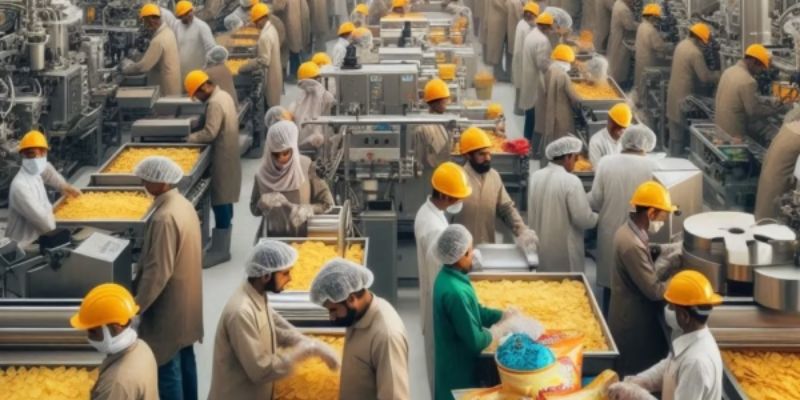
Potato chips manufacturing is one of the most profitable business ideas under 1 lakh in India. The demand for snacks like potato chips is always high, whether in urban or rural areas. People consume chips as a quick snack with tea, at parties, or as an accompaniment to meals. With the growing snack culture in India, starting a potato chips manufacturing business can be a lucrative opportunity.
- Investment Breakdown: ₹40,000 – ₹75,000 for an industrial potato slicer, batch fryer, de-oiling machine, and pouch sealer.
- Raw Materials: High-starch potatoes (e.g., Chipsona variety), cooking oil, seasoning spices (Masala, Cream & Onion, Salt).
- Licenses Required: FSSAI Basic Registration, Udyam Registration, Trade License.
- Profit Potential: 30%–40% profit margin.
Government Loans & Subsidies for Micro-Manufacturing Units
If you are starting a manufacturing unit under ₹1 Lakh, you can utilise government schemes for funding and support:
- Pradhan Mantri MUDRA Yojana (Shishu Category): Collateral-free loans up to ₹50,000 for micro-enterprises with minimal documentation and low interest rates.
- PMEGP (Prime Minister Employment Generation Programme): Offers 15% to 35% capital subsidies for setting up micro-manufacturing ventures.
- PMFME Scheme: Ideal for food units (Pickle, Jam, Noodle, Potato Chips) offering 35% credit-linked subsidies for equipment purchase.
- MSME Udyam Registration: Free online registration providing access to priority sector lending, lower interest rates, and fee waivers for trade license processing. You can register your enterprise directly on the official Udyam Registration Portal.
Next Steps: How to Start Your Micro-Factory
- Select Your Niche: Choose an idea based on local raw material access and immediate local demand.
- Secure Space & Power: Ensure a clean 200–300 sq. ft. shed or room with single-phase power.
- Get Free Udyam Registration: Register your micro-business on the official government Udyam portal.
- Source Machinery: Compare specs and prices from verified Indian manufacturers before finalising equipment.
More Articles on Manufacturing Business:
- Manufacturing Businesses to Start Under 5 Lac Rupees
- Top Small-Scale Manufacturing Business Ideas
- How to Start a Manufacturing Company in India
Frequently Asked Questions (FAQs)
Can I really start a manufacturing business with just ₹1 Lakh in India?
Yes. Micro-scale manufacturing units like candle making, agarbatti production, handmade soaps, or paper plates require minimal heavy machinery. You can start with basic manual or semi-automatic equipment, operate from a 150–300 sq. ft. room using standard domestic power, and scale up as your cash flow grows.
What are the essential licenses required to start a micro-manufacturing unit?
At a minimum, you will need:
- MSME Udyam Registration: Free online government registration for micro-enterprises.
- FSSAI Registration: Mandatory for food processing units (pickles, papad, noodles, chips).
- Local Trade License: Issued by your local municipal body or Gram Panchayat.
- GST Registration: Optional initially, but required if your annual turnover exceeds ₹40 Lakhs (₹20 Lakhs for services/special category states) or if you plan to sell inter-state/online.
How can I get a government loan to fund a manufacturing business under ₹1 Lakh?
You can apply for collateral-free financial assistance through two primary schemes:
- PM MUDRA Yojana (Shishu Loan): Offers collateral-free loans up to ₹50,000 for micro-enterprises with basic ID proof and a simple project report.
- PMEGP (Prime Minister’s Employment Generation Programme): Provides credit-linked subsidies ranging from 15% to 35% on setting up micro-manufacturing projects.
Do these micro-manufacturing machines require commercial high-voltage power connections?
No. Most small-scale machinery suited for setups under ₹1 Lakh (such as 0.5 HP to 2 HP motors for paper plate machines, pedal agarbatti machines, or dough kneaders) runs smoothly on standard single-phase domestic electrical connections.
Which manufacturing business under ₹1 Lakh offers the highest profit margin?
Speciality and niche products offer the highest gross margins. For instance, Handmade Herbal Soaps (50%–100%) and Scented/Designer Candles (35%–50%) yield high margins per unit when positioned well in boutique markets, online storefronts, or local gifting channels.
Where should I market and sell products manufactured by a micro-unit?
Start locally to maintain low transport costs. Supply local retail grocers, wholesalers, street food vendors, and caterers. To expand, create a WhatsApp Business catalogue, sell on hyper-local delivery apps, leverage local Facebook/Instagram pages, and list your business on regional directories.

Rupak Chakrabarty is the Founder and Lead Business Coach at MUVSI. With over two decades of experience in entrepreneurship, marketing, and business consulting, he helps aspiring entrepreneurs and MSMEs build profitable, market-driven businesses. His expertise includes business planning, B2B marketing, customer acquisition, and digital growth strategies.