Starting a manufacturing business may sound expensive, but the truth is, you don’t need a huge investment to get started. There are several manufacturing business ideas under 2 lakhs that you can launch right from your home or a small rented space. These low-cost ideas are ideal for beginners, small-town entrepreneurs, job seekers, women, students, or anyone looking to start something of their own.
India’s small-scale industry sector is growing rapidly. With rising demand for locally made products and support from government schemes, this is a great time to explore small manufacturing ventures. Whether you want to make incense sticks, candles, spice powders, or even eco-friendly bags, there are plenty of profitable options that require minimal machinery and a basic setup.
In this article, we’ll walk you through the best small manufacturing businesses you can start in India within a ₹2 lakh budget. You’ll learn what each business involves, how much it costs, what equipment you need, and how to get started. So, if you’ve been waiting for the right opportunity to start your entrepreneurial journey, read on.
Why Start a Manufacturing Business Under 2 Lakhs?
Starting a manufacturing business under 2 lakhs is not just affordable—it’s also a smart way to enter the world of entrepreneurship with less risk and more flexibility. Here’s why:
Low Investment, Low Risk
With a budget of ₹2 lakhs or less, you don’t need to take big loans or put your savings at risk. This makes it ideal for first-time business owners and small-town entrepreneurs.
High Demand for Local Products
India has a growing demand for locally made products, especially in categories like food, home essentials, eco-friendly goods, and personal care items. Small manufacturing units can easily tap into this demand.
Government Support for MSMEs
The Indian government offers schemes like PMEGP, Mudra Loans, and Startup India that help small manufacturers with funding, training, and marketing support.
Quick Profits with Basic Setup
Many low-cost manufacturing businesses, such as those that make candles, agarbatti, paper plates, or spices, can generate profits within a few months of launch with a basic machine and raw materials.
Flexible Work Model
You can run most of these businesses from home, a garage, or a small rented shop. This saves on overhead costs and gives you control over your time.
In short, if you’re looking for a low-risk, high-potential business idea with hands-on work and steady income, a manufacturing business under ₹2 lakhs is a great place to start.
Manufacturing Overview (Under ₹2 Lakh)
Business Idea | Investment Range |
Agarbatti Manufacturing | ₹1,00,000 – ₹1,20,000 |
Candle Manufacturing | ₹1,50,000 – ₹2,00,000 |
Paper Plate Manufacturing | ₹1,00,000 – ₹1,20,000 |
Herbal Hair Oil Manufacturing | ₹1,50,,000 – ₹2,00,000 |
Jute Bag Manufacturing | ₹1,35,000–₹1,80,000 |
Pouch Manufacturing | ₹1,20,000 – ₹2,00,000 |
Coconut Oil Extraction (Mini Unit) | ₹1,40,000 – ₹1,90,000 |
Detergent Powder Manufacturing | ₹1,20,000 – ₹1,80,000 |
Nail Manufacturing | ₹1,40,000 – ₹1,90,000 |
Spice Powder Manufacturing | ₹1,20,000 – ₹1,80,000 |
Top Manufacturing Business Ideas Under 2 Lakhs to Start
1. Agarbatti (Incense Stick) Manufacturing

Agarbatti, or incense sticks, are widely used in Indian households for religious rituals, meditation, and creating a pleasant ambience. The demand is steady throughout the year, making it one of the most reliable small-scale manufacturing business ideas under 2 lakhs in India. You can start this business with a semi-automatic machine and a small workspace—even at home.
How It Works
The manufacturing process involves mixing raw materials like charcoal powder, jigat powder, and essential oils, then rolling the paste onto bamboo sticks. After drying, the sticks are perfumed and packaged for sale.
How to Start
- Learn the process by visiting a small unit or attending a short training.
- Purchase a semi-automatic machine (costs around ₹50,000–₹70,000).
- Buy raw materials from local suppliers or wholesalers.
- Create a brand or sell in bulk to local retailers, temple shops, and distributors
- Start small with local marketing, and grow through bulk orders or online platforms like Amazon and Flipkart.
Startup Cost Breakdown
- Agarbatti Machine – 60,000
- Raw Materials (1st lot) – 20,000
- Packaging & Branding – 10,000
- Rent & Utilities (if any) – 5000
- Miscellaneous – 5000
- Total – ₹1,00,000 – ₹1,20,000
Earning Potential
You can earn ₹15,000–₹40,000 per month depending on production volume and sales channels. Profits increase with bulk orders and brand awareness.
2. Candle Manufacturing Business

Candle making is a simple yet profitable small-scale manufacturing business that you can start with a low investment. Candles are used not only during festivals like Diwali or Christmas but also for home decor, aromatherapy, and gifting. The growing demand for scented and designer candles has turned this traditional craft into a trendy business opportunity. At present, candle making is one of the most profitable manufacturing business ideas under 2 Lakhs that can be started from home.
How It Works
The process involves melting wax, adding colour and fragrance, pouring the mixture into moulds, and letting it set. You can make decorative, scented, floating, or container candles depending on your niche and creativity.
How to Start
- Learn the basics through YouTube tutorials or short local workshops.
- Buy candle-making equipment such as moulds, wax, wicks, fragrances, and a heating setup.
- Create a product line with unique shapes, colours, and packaging.
- Sell your candles through local gift shops, craft fairs, Instagram or Facebook, and online marketplaces like Amazon, Meesho, or Flipkart.
Startup Cost Breakdown
- Wax, moulds & tools – 50,000
- Fragrances & dyes – 30,000
- Packaging materials – 20,000
- Branding/labelling design – 25,000
- Marketing & misc. – 25,000
- Total – 1,50,000 – 2,00,000
Earning Potential
You can start earning ₹20,000–₹50,000 per month, depending on your marketing and quality. Designer and scented candles have higher profit margins.
3. Paper Plate Manufacturing
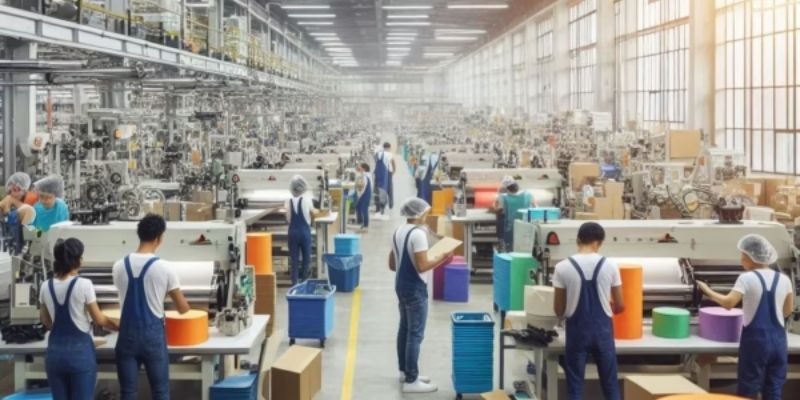
Paper plates are in high demand as there is an increasing shift toward eco-friendly and disposable products across India. They’re used in small eateries, food stalls, parties, and religious gatherings. The paper plate business is easy to start and doesn’t require complex technical knowledge.
How It Works
The business involves converting paper sheets into plates using a semi-automatic or fully automatic paper plate machine. You’ll need raw materials like paper rolls or silver-laminated sheets and a die for cutting.
How to Start
- Purchase a paper plate machine, either manual or semi-automatic.
- Source raw materials from wholesale paper dealers.
- Get a trade license from your local municipal authority (if needed).
- Sell your paper plates to local shops and caterers, street vendors, wholesale markets, and through B2B platforms like IndiaMART or TradeIndia
Startup Cost Breakdown
- Semi-automatic machine: 60,000 – 80,000
- Raw materials (initial): 20,000
- Packaging & transport: 10,000
- Miscellaneous expenses:10,000
- Total – ₹1,00,000 – ₹1,20,000
Earning Potential
You can earn ₹25,000–₹60,000 per month depending on order volume and machine capacity. Bulk orders and regular clients ensure consistent income.
4. Herbal Hair Oil Manufacturing

The demand for natural and chemical-free personal care products is skyrocketing in India. Herbal hair oil is a product that is popular in both urban and rural markets. Starting a small-scale herbal hair oil manufacturing unit requires low investment and can be done from home or a small rented space.
How It Works
The business involves preparing herbal oil by infusing natural ingredients like amla, bhringraj, neem, hibiscus, and coconut or sesame oil. After filtering and packaging, it can be sold under your brand locally or online.
How to Start
- Learn the formulation: You can follow a tried-and-tested recipe or take a short herbal formulation course.
- Source raw materials: Buy herbs, base oils, bottles, and labels in bulk from reliable suppliers.
- Ensure hygiene and compliance: Maintain basic cleanliness and comply with local FSSAI or cosmetic regulations (if selling at scale).
- Create your brand: Design attractive labels and packaging.
- Sell via local salons and beauty shops, Ayurvedic stores, WhatsApp/Facebook/Instagram, and Online marketplaces like Amazon or Flipkart
Startup Cost Breakdown
- Raw materials (herbs & oils) – 500,000
- Packaging (bottles, labels) – 25,000
- Basic equipment (boiler, utensils, strainer) – 30,000
- Branding & initial marketing – 25,000
- Miscellaneous expenses – 20,000
- Total – ₹1,50,,000 – ₹2,00,000
Earning Potential
You can earn ₹30,000–₹70,000 per month depending on pricing, branding, and marketing efforts. Margins are typically high in this business, up to 40–60%.
5. Jute Bag Manufacturing

As the world shifts toward eco-friendly alternatives, jute bags are gaining popularity. They’re biodegradable, reusable, and perfect for shopping, gifting, or promotional use. With India being one of the largest jute producers, starting a jute bag manufacturing business is both affordable and sustainable.
How It Works
Jute fabric is cut and stitched into different styles of bags, like tote bags, shopping bags, pouches, and promotional bags. Designs and logos can be printed for branding or customisation. You can supply to local retailers, wholesalers, or sell online.
How to Start
- Source jute fabric from local mills or suppliers.
- Purchase basic stitching machines and materials like threads, handles, and lining cloth.
- Design standard and customised bags for various needs.
- Sell through local markets, exhibitions, or eCommerce platforms.
- Pitch to businesses for branded promotional bags.
Startup Cost Breakdown
- Jute fabric & materials – 30,000
- Sewing machine (1–2 units) – 50,000
- Printing setup or outsourced – 20,000
- Packaging & branding – 15,000
- Marketing & website – 10,000
- Miscellaneous – 10,000
- Total – ₹1,35,000–₹1,80,000
Earning Potential
By selling 300–500 bags monthly at ₹60–₹100 profit per piece, you can earn ₹20,000–₹40,000+ per month. Bulk orders from corporates or boutiques can significantly boost profits.
6. Pouch Manufacturing
Pouches are widely used in packaging items like spices, snacks, detergent, cosmetics, and more. With the rise of small-scale product makers and e-commerce, the demand for affordable and customizable pouches is booming. This low-cost manufacturing business under 2 Lakhs can be started from home or a small rented space.
How It Works
In this business, you produce plastic or laminated pouches of different sizes using manual or semi-automatic sealing machines. You can offer plain or printed options and sell in bulk to local retailers, small brands, or food businesses.
How to Start
- Choose the type of pouch: stand-up, zip lock, flat, or spout.
- Buy a manual sealing machine or a semi-automatic pouch-making machine.
- Source raw materials like laminated film rolls or pre-printed plastic sheets.
- Connect with local businesses that need packaging.
- Sell through B2B platforms or your website.
Startup Cost Breakdown
- Manual/Semi-automatic machine – 40,000 – 60,000
- Raw materials (plastic rolls) – 30,000 – 50,000
- Branding & Packaging – 10,000
- Workspace Setup – 20,000
- Marketing – 10,000
- Total – ₹1,20,000 – ₹2,00,000
Earning Potential
You can easily make ₹20,000–₹50,000 per month, depending on volume and clients. High margins are possible if you offer printed or custom pouches.
7. Coconut Oil Extraction (Mini Unit)
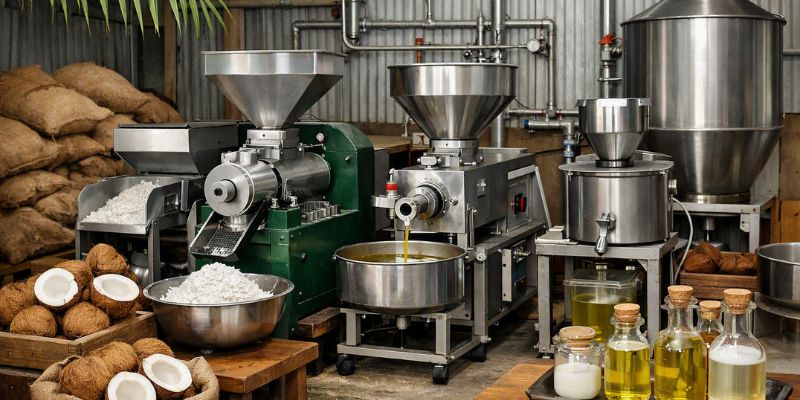
Coconut oil is used in cooking, cosmetics, hair care, and wellness. Starting a small-scale cold-pressed coconut oil extraction business is a smart option, especially if you live in South India or near coconut farming regions.
How It Works
Dry coconuts (copra) are pressed using an oil expeller to extract virgin or cold-pressed coconut oil. The oil is then filtered, packaged, and sold in bottles or pouches. You can target local stores, organic shops, and even online buyers.
How to Start
- Buy dried coconuts or copra from local farms.
- Invest in a mini cold-press oil extraction machine.
- Filter and package the oil in food-grade containers.
- Build a brand around purity and local sourcing.
- Sell through organic markets, D2C websites, or local shops.
Startup Cost Breakdown
- Mini oil expeller machine – 70,000 – 90,000
- Raw material (copra) – 30,000 – 40,000
- Bottles & Packaging – 20,000
- Branding & Labels – 10,000
- Miscellaneous – 10,000
- Total – ₹1,40,000 – ₹1,90,000
Earning Potential
Selling 100 litres a month with ₹80–₹100 profit per litre can give you ₹8,000–₹10,000 monthly. Branding as “pure” or “cold-pressed” can command even higher margins.
8. Detergent Powder Manufacturing

Detergent powder is a household essential with high demand in urban and rural India. Starting a small-scale detergent powder unit is affordable and doesn’t require heavy machinery or large infrastructure. It’s ideal for first-time manufacturers and is one of the most lucrative manufacturing business ideas under 2 Lakhs in the FNCG sector.
How It Works
You blend raw materials like soda ash, acid slurry, and LABSA using a mixer and then package them into pouches or containers for retail.
How to Start
- Learn the basic detergent formula or take a short training.
- Purchase a manual mixing unit or ribbon blender.
- Get raw materials from chemical suppliers.
- Package the product attractively in small SKUs (500g, 1kg).
- Promote in local kirana stores and residential societies.
Startup Cost Breakdown
- Mixer machine – 40,000 – 60,000
- Raw materials (first batch) – 30,000 – 50,000
- Packaging material – 20,000
- Branding & Marketing – 10,000
- Licenses & Miscellaneous – 10,000
- Total – ₹1,20,000 – ₹1,80,000
Earning Potential
Profit margins can be 20–30%. Monthly earnings can reach ₹25,000–₹50,000 with local distribution.
9. Nail Manufacturing
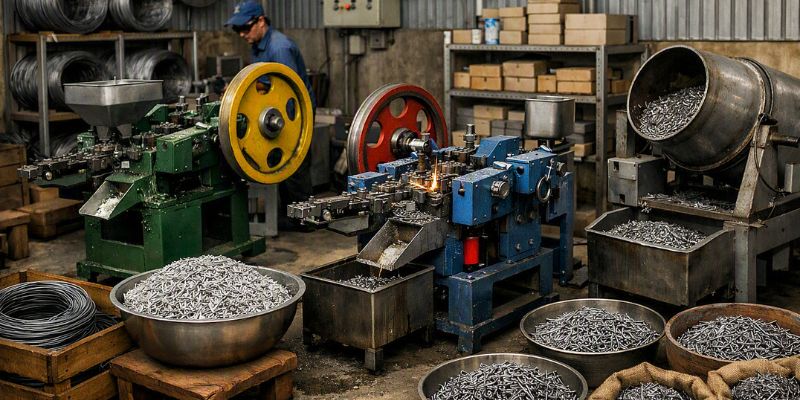
Construction nails are small but essential products in the furniture, building, and packaging industries. A nail-making business needs minimal investment and raw materials, making it an ideal small-scale manufacturing idea.
How It Works
Mild steel wire is fed into a nail-making machine that cuts and shapes nails. They are then polished and packed in boxes for sale.
How to Start
- Buy a manual or semi-automatic nail-making machine.
- Source MS wire rolls.
- Package in weight-based boxes (1kg, 5kg).
- Sell to hardware stores, construction sites, or wholesalers.
Startup Cost Breakdown
- Nail-making machine – 60,000 – 80,000
- Wire raw material – 40,000
- Polishing drum (optional) – 20,000
- Packaging materials – 10,000
- Miscellaneous – 10,000
- Total – ₹1,40,000 – ₹1,90,000
Earning Potential
Nail manufacturing has low competition locally. You can earn ₹25,000+ monthly after gaining regular buyers.
10. Spice Powder Manufacturing
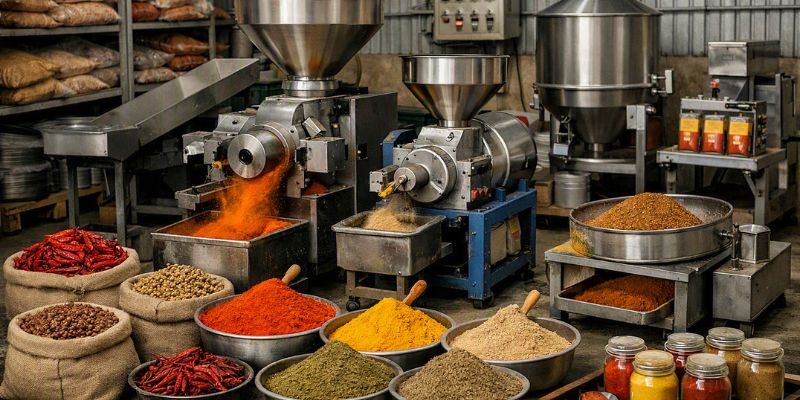
India is one of the largest consumers and exporters of spices. Starting a home-based or small spice powder unit (turmeric, chilli, coriander, etc.) can be profitable with low investment and high demand in retail and wholesale markets. Making spice powder is one of the most profitable manufacturing business ideas under 2 lakhs in the food sector.
How It Works
You buy whole spices, clean and dry them, grind them into powder, and package them in retail pouches.
How to Start
- Choose 2–3 commonly used spices.
- Buy a domestic or semi-commercial grinder.
- Source raw spices from mandis or farmers.
- Use food-grade pouches with your branding.
- Sell in local shops or on platforms like Amazon or Flipkart.
Startup Cost Breakdown
- Spice grinding machine – 50,000 – 70,000
- Raw spices (first lot) – 40,000
- Packaging and labels – 20,000
- License (FSSAI, local) – 5,000 – 10,000
- Marketing & Misc.- 15,000
- Total – ₹1,20,000 – ₹1,80,000
Earning Potential
Depending on scale and product range, monthly profit can go from ₹20,000 to ₹60,000. Higher earnings are possible with bulk orders or private labelling.
More Articles on Manufacturing:
- Manufacturing Business Ideas Under ₹1 Lakh
- How to Start a Manufacturing Company in India
- Manufacturing Businesses to Start Under 10000 Rupees
- Top Small-Scale Manufacturing Business Ideas in India
- Manufacturing Business Ideas Under ₹5 Lakhs
Government Loans & Subsidies for Micro-Manufacturing Units
Starting a small-scale manufacturing unit doesn’t mean you have to fund everything out of your own pocket. The Government of India offers several credit schemes and capital subsidies designed specifically to assist micro-entrepreneurs:
- Prime Minister’s Employment Generation Programme (PMEGP): A credit-linked subsidy scheme administered by the KVIC. For manufacturing setups, you can get loans up to ₹50 Lakhs with a government capital subsidy ranging from 15% to 35% depending on your category (General, SC/ST, OBC, Women) and location (rural or urban).
- PM MUDRA Yojana (PMMY): Ideal for micro-units starting under ₹2 Lakhs. You can apply for the Shishu category (loans up to ₹50,000) or Kishore category (loans from ₹50,000 to ₹5 Lakhs) without collateral to cover equipment or working capital needs.
- Credit Guarantee Fund Trust for Micro and Small Enterprises (CGTMSE): Helps first-time entrepreneurs secure collateral-free loans from scheduled banks and financial institutions for setting up micro-factories.
- Stand-Up India Scheme: Facilitates bank loans between ₹10 Lakhs and ₹1 Crore for women and SC/ST entrepreneurs setting up greenfield manufacturing enterprises.
- PM Formalisation of Micro Food Processing Enterprises (PMFME): If you are entering spice powder manufacturing or coconut oil extraction, this scheme provides a 35% credit-linked subsidy (up to ₹10 Lakhs) along with training and support for branding and packaging.
Next Steps: How to Start Your Micro-Factory
Once you select the right manufacturing idea for your budget and location, follow this step-by-step launch roadmap:
- Conduct Local Market Research: Identify local demand, existing competitors, and potential distribution channels (retailers, wholesalers, or direct-to-consumer) in your region.
- Finalise Space & Infrastructure: Secure a space with adequate power supply, ventilation, and storage. Most businesses under ₹2 Lakhs (like candle making, spice grinding, or agarbatti making) can initially be launched from home or a small rented space.
- Obtain Basic Registrations & Licenses:
- Udyam Registration: Free online MSME registration to access government benefits and bank loans.
- GST Registration: Mandatory if you plan to sell inter-state, on e-commerce platforms, or cross the threshold limits.
- Trade License: From your local municipal body.
- FSSAI License: Required specifically for food-related units (Spice Powders, Coconut Oil Extraction, Herbal Hair Oils).
- Procure Machinery & Raw Materials: Reach out to verified machinery manufacturers (via platforms like IndiaMART or local machinery hubs) and negotiate trial orders for raw materials to test quality.
- Set Up Quality Control & Packaging: Invest in neat, food-grade, or durable packaging. Clear labelling with your brand name, MRP, batch number, and manufacturing date builds immediate consumer trust.
- Build Distribution & Sales Channels: Start locally by supplying to neighbourhood kirana stores, hardware outlets, or gift shops. Simultaneously, build an online presence through WhatsApp Business, social media, and B2B/B2C marketplaces.
Frequently Asked Questions (FAQs)
Q1. Can I start a manufacturing business under ₹2 Lakhs directly from home?
Yes. Businesses like candle making, agarbatti rolling, herbal hair oil blending, and spice powder packaging require compact machinery and minimal space, making them well-suited for a home-based setup or garage.
Q2. What licenses are mandatory for a micro-manufacturing unit in India?
At a minimum, you will need a Udyam MSME Registration and a local Trade License. If you manufacture food or edible products (spices, edible oils), an FSSAI Registration is compulsory. GST registration is recommended if you plan to sell through online channels or B2B platforms.
Q3. Is collateral required to get a loan under MUDRA or PMEGP?
No. MUDRA loans and CGTMSE-backed credit facilities offer collateral-free loans to micro-enterprises. For PMEGP, loans are sanctioned based on your project report and eligibility.
Q4. How long does it take for a ₹2 Lakh manufacturing unit to become profitable?
Most low-investment manufacturing units achieve break-even within 3 to 6 months. Operating margins typically range from 20% to 50%, depending on whether you sell directly to consumers or through wholesale distributors.
Q5. Can I sell products made in a micro-unit on platforms like Amazon, Flipkart, or Meesho?
Yes. E-commerce platforms are great for expanding your customer base. You will need a GST number, a trademark/brand name (optional but recommended), and compliant packaging to start selling online.

Rupak Chakrabarty is the Founder and Lead Business Coach at MUVSI. With over two decades of experience in entrepreneurship, marketing, and business consulting, he helps aspiring entrepreneurs and MSMEs build profitable, market-driven businesses. His expertise includes business planning, B2B marketing, customer acquisition, and digital growth strategies.