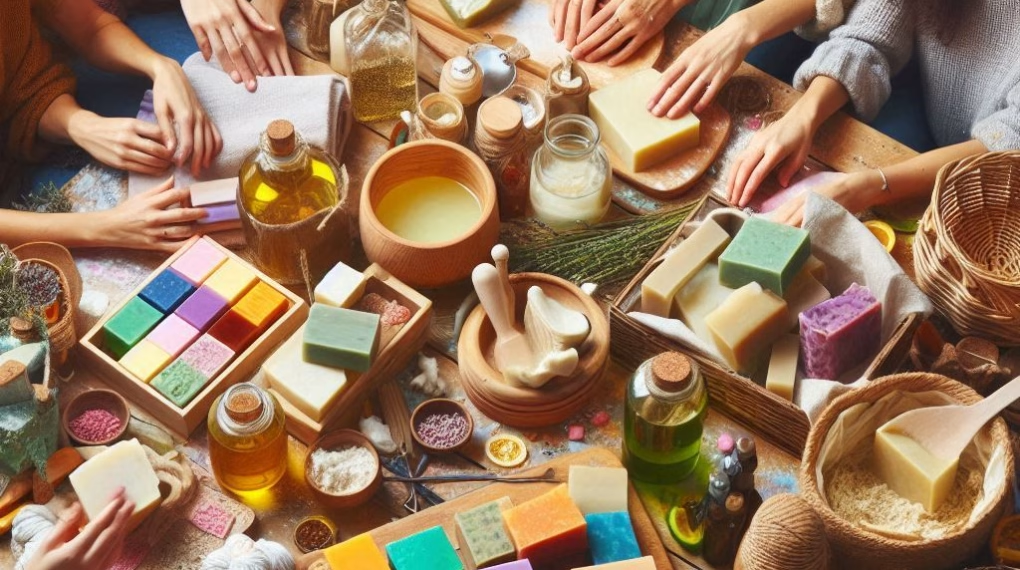
The natural and herbal soap market in India is experiencing one of its strongest growth phases in decades. Consumers are actively moving away from chemical-laden commercial soaps toward natural, herbal, and Ayurvedic alternatives — and they are willing to pay a significant premium for them.
A bar of neem-turmeric soap that costs ₹40 to produce sells for ₹150–200 retail. A premium saffron-and-rose soap that costs ₹70 to produce sells for ₹300–500. Profit margins of 50–65% are realistic and achievable, making herbal soap one of the highest-margin small manufacturing businesses in India in 2026.
You can start from home with a melt-and-pour setup for under ₹1 lakh. Or build a proper cold process soap unit for ₹3–5 lakh. The market — D2C, gifting, export, private label — is large, growing, and underserved by quality small manufacturers.
This guide covers everything: soap-making methods, investment breakdown, ingredients and sourcing, licenses, the full production process, profit calculation, where to sell, and verified supplier contacts.
Jump to:
Market opportunity · Making methods compared · Ingredients & formulations · Investment breakdown · Production process · Step-by-step startup · Licenses · Profit calculation · Where to sell · Top suppliers · FAQ
Why Herbal Soap Is One of the Best Businesses
- Consumer shift to natural is structural, not a trend. Post-COVID, Indian consumers have permanently elevated their awareness of skin health and ingredient safety. The shift from Lifebuoy and Lux to neem, turmeric, and charcoal soaps is happening across income levels — not just in premium urban segments.
- Highest margin in the category. Ayurvedic soaps command profit margins of 50–65% — higher than most food or packaging manufacturing businesses. The raw material cost (oils, herbs, lye) is genuinely low relative to the selling price when you build a recognisable brand.
- D2C and Instagram-native product. Herbal soaps photograph beautifully — swirls of turmeric, rose petals, charcoal layers. The product is made for social media. Indian D2C soap brands built entirely on Instagram and WhatsApp are doing ₹5–15 lakh per month within 18 months of launch.
- Private label demand is exploding. D2C skincare brands, beauty subscription boxes, hotel chains, and corporate gifting companies all need private label soap manufacturers who can produce consistent quality at scale. This is a B2B revenue stream that does not require you to build your own retail brand.
- The export opportunity is large. Natural and Ayurvedic soaps from India are in demand in the USA, UK, UAE, Canada, and Australia. Export prices are 3–5x domestic prices. Etsy sellers in the UK regularly source Indian handmade soap bases and finished soaps at premium margins.
- Raw materials are everywhere. Neem, turmeric, coconut oil, castor oil, aloe vera — all abundantly available across India at low cost. No import dependency.
Soap-Making Methods: Which One to Choose?
There are three main methods for making herbal soap in India. Your choice determines your investment, production speed, ingredient control, and target market.
Method | How it works | Investment | Curing time | Best for |
|---|---|---|---|---|
Melt & Pour (M&P) | Buy a pre-made soap base (transparent, white, goat milk, etc.), melt it, add herbs, fragrance, colour, pour into moulds, unmould after 1–2 hours | ₹50,000 – 1.5 lakh | None — ready in 2–4 hours | Beginners, home-based, gifting, fast D2C launch |
Cold Process (CP) | Mix oils (coconut, palm, castor) with lye (NaOH) — the saponification reaction creates soap. Add herbs and fragrance in trace. Pour, cut after 24 hrs, cure 4–6 weeks | ₹1.5 – 4 lakh | 4–6 weeks | Premium branding, export, maximum ingredient control, Ayurvedic formulations |
Hot Process (HP) | Same as cold process, but cooked in a slow cooker or oven — speeds up saponification. Soap is ready to use in 24–48 hours | ₹1.5 – 3 lakh | 24–48 hours | Faster production than CP, more rustic finish — good for wholesale |
Recommendation for beginners: Start with melt & pour to test fragrances, designs, and market demand without the lye safety learning curve. Once you have consistent sales and understand your buyers’ preferences, transition to a cold process for higher margins, premium positioning, and export capability.
For wholesale and private label, cold- or hot-process is the standard — buyers expect proper saponification, not M&P bases. A ₹3–5 lakh cold process setup can produce 300–500 bars per day with 2 workers.
Herbal Ingredients: What to Use and Why It Sells
Top-selling herbal soap types in India
Soap type | Key ingredients | Skin benefit claim | Retail price range |
|---|---|---|---|
Neem soap | Neem leaf extract/neem oil, coconut oil | Antibacterial, anti-acne, anti-fungal | ₹80 – 180/bar |
Turmeric soap | Turmeric powder/extract, sandalwood powder | Brightening, anti-inflammatory, even skin tone | ₹120 – 250/bar |
Charcoal soap | Activated charcoal, tea tree oil, and coconut oil | Deep pore cleansing, detoxifying, and oil control | ₹150 – 280/bar |
Coffee soap | Coffee grounds, coconut oil, vanilla fragrance | Exfoliating, cellulite, energising scent | ₹140 – 260/bar |
Rose & saffron soap | Rose water, rose essential oil, saffron extract | Anti-ageing, brightening, premium feel | ₹200 – 500/bar |
Aloe vera soap | Fresh or gel aloe vera, green tea extract | Soothing, hydrating, sensitive skin | ₹100 – 200/bar |
Neem-turmeric combo | Neem extract + turmeric + coconut oil | Anti-acne + brightening combo — most searched in 2026 | ₹130 – 240/bar |
Goat milk soap | Goat milk powder, shea butter, lavender oil | Moisturising, anti-ageing, gentle | ₹180 – 350/bar |
Base oils — the backbone of your soap
Oil | Benefit in soap | Cost (2026) | Recommended usage % |
|---|---|---|---|
Coconut oil | Lather, hardness, cleansing | ₹130 – 180/kg | 25–35% of oil blend |
Palm oil | Hardness, stable lather, longevity | ₹90 – 130/kg | 20–30% of oil blend |
Castor oil | Creamy lather, humectant, helps other oils lather | ₹120 – 160/kg | 5–10% of oil blend |
Olive oil | Conditioning, moisturising, and gentle on the skin | ₹200 – 350/kg | 20–40% of oil blend |
Neem oil | Antibacterial, anti-fungal — active ingredient | ₹150 – 250/kg | 5–15% of oil blend |
Shea butter | Premium moisturising, creamy feel, export essential | ₹300 – 500/kg | 5–15% of oil blend |
Beginner base recipe (cold process — 1 kg batch):
- Coconut oil: 300g (30%)
- Palm oil: 250g (25%)
- Olive oil: 300g (30%)
- Castor oil: 100g (10%)
- Neem oil: 50g (5%)
- Sodium hydroxide (lye): calculated using a lye calculator (always superfat at 5–8%)
- Distilled water: ~380g
- Herbal additive of choice: 1–3 tbsp per kg
- Fragrance / essential oil: 30–50g (3–5%)
Always use a lye calculator (soapcalc.net or brambleberry.com) before every cold process batch. Lye ratios change with every oil blend. Getting this wrong is dangerous and produces a failed batch.
Investment Breakdown: How Much Does It Cost?
Scale | Method | Total Investment | Capacity | Best For |
|---|---|---|---|---|
Home-based | Melt & pour | ₹80,000 – 1.5 lakh | 50–100 bars/day | D2C, gifting, Instagram launch |
Small unit | Cold process | ₹2 – 5 lakh | 150–400 bars/day | Branded retail, online, export |
Mid-scale unit | Cold/hot process | ₹6 – 15 lakh | 500–1,500 bars/day | Wholesale, private label, export |
Detailed cost breakdown (small cold process unit — ₹3–5 lakh)
Item | Estimated Cost |
|---|---|
Stainless steel soap mixing containers (2–3 sizes) | ₹5,000 – 12,000 |
Stick blender/immersion blender (heavy duty) | ₹3,000 – 8,000 |
Soap moulds (wooden loaf moulds, silicone) | ₹8,000 – 20,000 |
Soap cutter (wire or stainless steel slab cutter) | ₹5,000 – 15,000 |
Digital kitchen scale (accurate to 1g) | ₹1,500 – 4,000 |
Thermometer (infrared + probe) | ₹1,000 – 3,000 |
Safety gear (gloves, goggles, apron — lye safety) | ₹1,500 – 3,000 |
Curing racks | ₹3,000 – 8,000 |
Workspace setup (300–400 sq ft, 3 months rent) | ₹20,000 – 45,000 |
Initial raw materials (oils, lye, herbs, fragrance — 1 month) | ₹50,000 – 1 lakh |
Packaging (wrapping paper, labels, boxes) | ₹20,000 – 40,000 |
Cosmetics license + GST + Udyam | ₹15,000 – 35,000 |
Branding (logo, label design) | ₹8,000 – 20,000 |
Working capital buffer | ₹30,000 – 60,000 |
Total | ₹1.7 – 3.7 lakh |
Melt & pour startup is even simpler: Replace the lye, mixing containers, and safety gear with a soap base supply (₹80–150/kg), a microwave or double boiler, and silicone moulds. Total investment drops to ₹80,000–1.2 lakh for a home-based M&P unit producing 50–80 bars per day.
The Full Production Process
Method A: Melt & Pour (Beginner-friendly)
Stage | What happens | Time |
|---|---|---|
1. Melt the base | Cut the soap base into cubes. Melt in microwave (30-sec intervals) or double boiler. Do not overheat — keep below 70°C. | 5–10 mins |
2. Add colour | Add 1–2 drops of cosmetic-grade colour or natural pigment (turmeric, spirulina, charcoal). Stir gently. | 2 mins |
3. Add herbs & additives | Add herbal powders (neem, turmeric, coffee grounds), botanical extracts, or milk powder. Stir in evenly. | 3–5 mins |
4. Add fragrance | Cool slightly to 55–60°C. Add essential oil or fragrance oil (2–3% by weight). Stir briefly. | 2 mins |
5. Pour into moulds | Pour into silicone or plastic moulds. Spritz with 91% isopropyl alcohol to remove bubbles. Do not tap or shake. | 5 mins |
6. Set & unmould | Allow to cool at room temperature for 1–3 hours. Refrigerate for 15 mins if needed to firm up. Unmould carefully. | 1–3 hrs |
7. Package | Wrap in kraft paper or place in box. Apply label. No curing required — M&P soaps are ready to sell immediately. | 30 mins/batch |
Method B: Cold Process (Premium / Export)
Stage | What happens | Time |
|---|---|---|
1. Safety preparation | Wear gloves, goggles, and an apron. Work in a ventilated space. Prepare all equipment and measure all ingredients by weight before starting. | 15 mins |
2. Make a lye solution | Slowly add lye (NaOH) to distilled water — never the reverse. Solution heats to 80–90°C. Allow to cool to 40–45°C. | 30–45 mins cooling |
3. Melt and cool oils | Melt solid oils (coconut, palm) in a double boiler. Add liquid oils. Cool to 40–45°C to match the lye temperature. | 30 mins |
4. Combine and blend | Slowly pour the lye solution into oils while stick-blending in short bursts. Blend until “trace” — batter has the consistency of thin custard. | 5–15 mins |
5. Add extras | At trace, add herbal powders, essential oils, and fragrance. Blend briefly. Add colour if desired. | 5 mins |
6. Pour into moulds | Pour into loaf or individual moulds. Tap to remove air bubbles. Insulate with a towel or blanket for 24 hrs (gel phase). | 10 mins |
7. Unmould and cut | After 24–48 hours, unmould the loaf. Cut into individual bars using a soap cutter. Bars are still caustic at this stage — handle with gloves. | 30 mins |
8. Cure | Place bars on curing racks in a cool, ventilated space for 4–6 weeks. This completes saponification, hardens the bar, and extends shelf life to 12–18 months. | 4–6 weeks |
9. Quality check & package | Check pH (should be 8–10). Inspect for soda ash, cracking, or DOS (dreaded orange spots). Wrap and label. | 30 mins/batch |
Production planning for cold process: Because bars take 4–6 weeks to cure, you need to have 4–6 weeks of cured stock before your first sale. Start production 6 weeks before your launch date. Once running, produce daily — your curing stock is your rolling inventory.
Step-by-Step: How to Start Your Herbal Soap Business
Step 1 — Learn the craft properly (Week 1–2)
Do not skip this step. Bad soap — wrong lye ratios, incomplete cure, skin-irritating pH — damages your reputation before it is even built. Make 10–15 test batches at home. Test each bar on your own skin. Share with family. Get honest feedback before selling to anyone.
Step 2 — Decide your method and product range (Week 2)
Start with 3–4 soap types. If going M&P: neem-turmeric, charcoal, coffee, and rose. If going cold process: a base nourishing soap, a neem-turmeric antibacterial, and a premium rose-saffron. Keep SKUs minimal until you know what your market actually buys.
Step 3 — Get your cosmetics license (Week 2–4)
This is the most important compliance step for soap. Apply for a Cosmetics Manufacturing License (Form 32 under the Drugs and Cosmetics Act) through your State Drug Controller’s office. This is non-negotiable — selling cosmetic soap without this license is illegal and can result in product seizure. Also, register for GST and Udyam. Estimated time: 2–6 weeks.
Step 4 — Source raw materials and build your formula library (Week 3–5)
Order oils in 5–10 kg quantities initially. Source herbal powders from Ayurvedic raw material suppliers (Bengaluru, Hyderabad, Delhi wholesale). Test each herb for colour stability, skin safety, and aroma interaction with your fragrance oils. Document every formula — exact weights, temperatures, and results.
Step 5 — Develop packaging and brand story (Week 4–6)
In the herbal soap market, your packaging and brand story are the reasons someone picks your soap over a mass-market brand. Wrap in kraft paper or muslin cloth. Use simple, clear labels with ingredient list (INCI names required legally), net weight, manufacturing date, expiry, and your cosmetics license number. A clear brand story — “handmade in [your city] with locally sourced neem and turmeric” — builds trust instantly.
Step 6 — Produce your first sellable batch (Week 6–8)
For M&P: produce 100–150 bars in your confirmed range. For cold process: start producing in week 1, so bars are cured and ready in week 5–6. Photograph every variant in natural light before packaging.
Step 7 — Launch D2C and approach gift buyers (Week 8+)
Launch on Instagram with your brand story and process videos. Create a WhatsApp Business catalogue. List on Amazon Handmade. Approach local gift shops, beauty boutiques, and spas with physical samples. Corporate Diwali and Christmas gifting orders are your biggest single revenue opportunity — approach HR departments with gifting sets 6–8 weeks before the festival.
Licenses and Registrations Required
License / Registration | Where to apply | Cost | Notes |
|---|---|---|---|
Cosmetics Manufacturing License (Form 32) | State Drug Controller / Central Drugs Standard Control Organisation | ₹5,000 – 20,000 | Mandatory for all cosmetic soap — this is your most important license |
Udyam (MSME) Registration | udyamregistration.gov.in | Free | Apply first — needed for loans and subsidies |
GST Registration | gst.gov.in | Free (agent ₹1,000–2,000) | GST on soap: 18% for cosmetic soap; 12% for medicated; check with CA |
Trade License | Local municipal corporation | ₹500 – 3,000/year | Required for commercial premises |
AYUSH License | State AYUSH Department | ₹10,000 – 30,000 | Only if making Ayurvedic medicinal claims on packaging (e.g. “treats skin disease”) |
IEC (Import Export Code) | ₹500 | Only if exporting |
Important licensing distinction: If your soap is a cosmetic (cleans skin, improves appearance), the Form 32 cosmetics license applies. If your soap makes medicinal claims (e.g. “cures eczema”, “treats psoriasis”), it becomes a drug and requires a full drug manufacturing license. Keep your label claims in the cosmetic category to avoid the more complex drug licensing process.
Label compliance under the Cosmetics Rules 2020 requires: product name, net weight, ingredient list in INCI (International Nomenclature of Cosmetic Ingredients) format, manufacturing and expiry date, manufacturer’s name and address, cosmetics license number, and batch number.
Profit Calculation: What Can You Actually Earn?
Scenario A — Home-based M&P unit (80 bars/day)
Item | Monthly figures |
|---|---|
Production (25 days × 80 bars) | 2,000 bars (100g each) |
Avg selling price (D2C, Instagram) | ₹200 per bar |
Gross revenue | ₹4,00,000 |
M&P soap base (₹110/kg × 200 kg) | ₹22,000 |
Herbs, fragrance oils, colour (₹15/bar) | ₹30,000 |
Packaging (kraft wrap, label, box — ₹25/bar) | ₹50,000 |
Shipping (avg ₹70/order, 200 orders) | ₹14,000 |
Misc (electricity, materials) | ₹8,000 |
Total operating cost | ₹1,24,000 |
Monthly net profit | ₹2,76,000 (~69%) |
Scenario B — Small cold process unit (250 bars/day, wholesale + D2C mix)
Item | Monthly figures |
|---|---|
Production (25 days × 250 bars — 100g each) | 6,250 bars |
Avg blended selling price (D2C ₹220 + wholesale ₹90, 60/40 mix) | ~₹168/bar |
Gross revenue | ₹10,50,000 |
Oils (coconut, palm, olive, castor — ₹28/bar avg) | ₹1,75,000 |
Lye + distilled water (₹5/bar) | ₹31,250 |
Herbs, essential oils, additives (₹18/bar) | ₹1,12,500 |
Packaging (₹22/bar avg) | ₹1,37,500 |
Labour (2 workers × ₹14,000) | ₹28,000 |
Rent, electricity, misc | ₹28,000 |
Total operating cost | ₹5,12,250 |
Monthly net profit | ₹5,37,750 (~51%) |
Break-even: A home-based M&P unit recovers investment in 2–4 months. A cold process unit typically recovers in 6–10 months, depending on sales mix.
Where to Sell Your Herbal Soaps
D2C and gifting (highest margin — start here)
- Instagram Shop — The primary sales channel for herbal soap brands in India in 2026. Post your ingredient sourcing, the soap-making process, and finished product photos. Stories and Reels of soap being cut, unmoulded, or lathered perform extremely well. Link to WhatsApp for order placement.
- WhatsApp Business — Set up a product catalogue. Share in local women’s groups, housing society groups, and office groups. Referral-based selling from neighbours and friends is how most successful home soap brands got their first 100 customers.
- Corporate gifting — A set of 3 herbal soaps in a kraft gift box sells for ₹400–700 for corporate gifting. Contact HR teams with a gifting catalogue 6 weeks before Diwali, Christmas, and Women’s Day. One corporate client order can be 200–1,000 sets.
- Amazon Handmade India — A growing channel for handmade and natural soaps. Takes 2–3 months to build reviews and sales momentum, but generates passive orders once established.
Retail and wholesale
- Organic and natural product stores — Stores like Organic India, Nature’s Basket, and local organic shops are actively looking for quality herbal soap suppliers. Approach with samples, FSSAI/cosmetics license copies, and a wholesale price list.
- Spas, salons, and wellness centres — Premium soap for guest bathrooms and retail display. Regular monthly orders at wholesale. Target boutique spas over large chains for faster onboarding.
- Gift shops and boutiques — Particularly those near tourist areas, airports, and malls. Herbal soaps with “Made in India” and local ingredient stories sell well as souvenirs and gifts.
- Pharmacies — Neem and medicated-positioned (but cosmetically licensed) soaps sell well in pharmacies. Approach local independent pharmacies first before targeting chains.
Export and private label
- Etsy (for USA, UK, Australia) — Indian handmade soap sellers on Etsy regularly generate ₹2–8 lakh per month. Saffron, rose, turmeric, and neem soaps with “Ayurvedic” positioning sell at USD 8–20 per bar.
- Private label manufacturing — Produce soaps for D2C skincare brands that sell under their own label. You manufacture to their formulation, they handle branding and sales. No brand building required. Approach small D2C beauty brands on Instagram who are scaling but have not set up their own manufacturing.
- Hotel and resort amenities — Boutique resorts and heritage hotels prefer locally made herbal soaps for their bathrooms as a premium “local experience” touch. Approach directly with a sample set and a private label proposal.
Top Suppliers in India
Soap base suppliers (for M&P)
Supplier | Location | What they supply | MOQ |
|---|---|---|---|
VedaOils | Delhi (pan-India shipping) | Transparent, white, goat milk, shea butter soap bases | 1 kg |
Nesso Aroma | Bengaluru | Soap bases, essential oils, and herbal extracts | 500g |
Local chemical suppliers | All major cities | Industrial M&P soap base in bulk | 25 kg |
Base oils suppliers (for cold process)
Oil | Best sourcing location | Price (2026 approx.) |
|---|---|---|
Coconut oil | Kerala, Tamil Nadu, coconut oil mills, local wholesale | ₹130 – 175/kg |
Palm oil | Chemical and oil suppliers in Mumbai, Chennai | ₹90 – 130/kg |
Castor oil | Gujarat castor oil producers; wholesale in Ahmedabad | ₹120 – 160/kg |
Olive oil (for soap grade) | Online (VedaOils, Nesso); import agents | ₹200 – 320/kg |
Neem oil | Rajasthan, Andhra Pradesh, neem oil producers; IndiaMART | ₹150 – 250/kg |
Herbal powder and extract suppliers
Supplier / Source | Location | What they supply |
|---|---|---|
Ayurvedic raw material wholesale markets | Bengaluru (KR Market), Hyderabad (Charminar area), Delhi (Khari Baoli) | Neem powder, turmeric, sandalwood, rose petals, multani mitti, all herbal powders |
Kama Ayurveda / wholesale herb suppliers | Delhi, online | Standardised extracts, premium herbal powders |
IndiaMART herbal extract suppliers | Pan-India | Neem extract, aloe vera gel, saffron extract, green tea extract |
📲 Need supplier introductions?
We connect herbal soap entrepreneurs with verified soap base suppliers, base oil dealers, herbal powder wholesalers, and cosmetics packaging suppliers across India.
Click here to send your requirement
Tell us: your city · M&P or cold process · monthly quantity estimate
Common Mistakes to Avoid
- Skipping the cosmetics license. Many home soap makers sell without a Form 32 cosmetics license, thinking it is a small business exemption. It is not. If a customer or a drug inspector raises a complaint, you face product seizure and legal action. Get the license before your first sale.
- Making medicinal claims on the label. Writing “cures acne” or “treats skin disease” on a soap label makes it a drug, not a cosmetic — requiring a much stricter license. Stick to cosmetic claims: “helps reduce blemishes”, “with antibacterial neem”, “brightening turmeric”. The difference matters legally.
- Not using a lye calculator for the cold process. Every oil has a different saponification value. Using too much lye produces caustic, skin-burning soap. Too little leaves excess oils that go rancid. Always use a lye calculator — soapcalc.net is free and accurate.
- Selling before full cure. Cold process soap at 2 weeks is still completing saponification. pH may still be above 10. Always wait the full 4–6 weeks and pH-test before selling.
- Underpricing D2C because competitors are cheaper. The mass-market soap price (₹30–50) is your competitor for wholesale plain soap, not for your branded herbal soap. Your target customer is the person who is already buying The Body Shop or Forest Essentials. Price accordingly at ₹150–300 per bar.
- Buying fragrance oils without checking skin-safe status. Not all fragrance oils are skin-safe — some are designed for candles or diffusers and can irritate when used in soap. Always buy fragrance oils specifically rated as skin-safe and soap-compatible.
Read: Top Manufacturing Business Ideas in India
Conclusion: Is Herbal Soap Manufacturing Worth Starting?
Yes — and it is one of the very few manufacturing businesses where brand storytelling matters as much as production quality. The Indian consumer in 2026 wants to know where their soap comes from, what is in it, and who made it. That is a story a small home manufacturer can tell better than any large FMCG company.
Start with melt-and-pour to test your market and build your Instagram presence. Invest in the cosmetics license from day one. Move to cold process once you have consistent demand — it unlocks export capability and private label revenue that can scale your business beyond the D2C ceiling.
The margins are exceptional. The raw materials are abundant. And the market — in India and globally — is actively looking for what you will make.
Frequently Asked Questions
How much investment is needed to start a herbal soap business in India?
A home-based melt-and-pour herbal soap business can be started with ₹80,000–1.5 lakh. A small cold process unit with proper equipment costs ₹2–4 lakh. A mid-scale unit producing 500+ bars per day for wholesale and export requires ₹6–12 lakh.
What license is required for herbal soap manufacturing in India?
Herbal soaps and cosmetic soaps require a Cosmetics License under the Drugs and Cosmetics Act (Form 32 / manufacturing license). You also need GST registration and Udyam (MSME) registration. If claiming Ayurvedic benefits, an AYUSH manufacturing license may be required.
What is the profit margin in herbal soap manufacturing?
Profit margins in herbal soap manufacturing range from 35–55% for standard handmade soaps. Premium Ayurvedic and branded soaps command margins of 50–65%. A soap bar costing ₹35–50 to produce sells for ₹120–250 retail, making this one of the highest-margin small manufacturing businesses in India.
What is the difference between cold process and melt-and-pour soap making?
Melt-and-pour (M&P) uses a pre-made soap base — you melt it, add herbs and fragrance, pour into moulds, and it sets in hours. It is easiest for beginners. Cold process (CP) involves mixing oils with lye (sodium hydroxide) from scratch — more control over ingredients, better for premium and export soaps, but requires 4–6 weeks curing time and lye safety precautions.
Which herbal soap ingredients sell best in India?
The top-selling herbal soap ingredients in India in 2026 are neem (antibacterial), turmeric (brightening), charcoal (detoxifying), rose and saffron (premium gifting), coffee (exfoliating), and aloe vera (soothing). Combination soaps like neem-turmeric and coffee-charcoal are among the fastest-selling SKUs online.

Rupak Chakrabarty is the Founder and Lead Business Coach at MUVSI. With over two decades of experience in entrepreneurship, marketing, and business consulting, he helps aspiring entrepreneurs and MSMEs build profitable, market-driven businesses. His expertise includes business planning, B2B marketing, customer acquisition, and digital growth strategies.