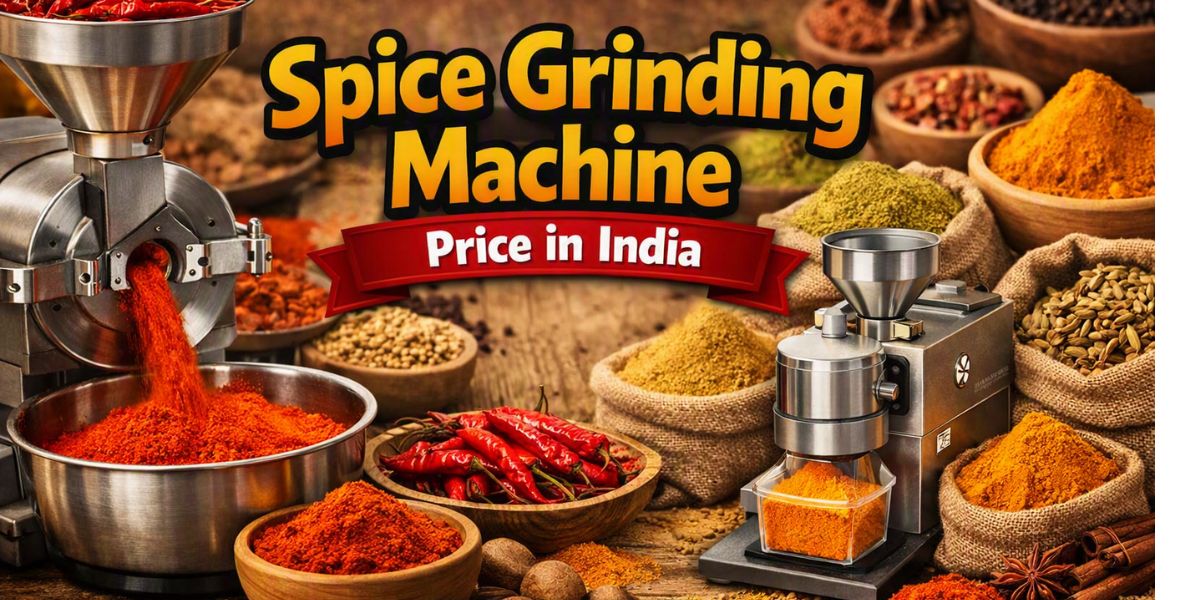
Buying a spice grinding machine without understanding the real price range is one of the most common mistakes new masala manufacturers make — either overpaying for capacity you don’t need yet, or underbuying and hitting a capacity wall within months. This guide breaks down exactly what you’ll pay, for what, and why prices vary as much as they do.
For the complete step-by-step process — investment breakdown, licensing, sourcing, and profit calculation — see our full guide: How to Start a Spices & Masala Manufacturing Business in India. This page focuses specifically on machine pricing.
Quick Price Summary
Machine | Price Range | Purpose |
|---|---|---|
Spice pulveriser/grinder | ₹50,000 – ₹2.5 lakh | Grinds whole dried spices into powder |
Spice blender/mixer | ₹30,000 – ₹1 lakh | Mixes multiple ground spices in fixed ratios |
Sieving machine | ₹15,000 – ₹50,000 | Ensures uniform powder texture |
Cleaning & destoning machine | ₹25,000 – ₹80,000 | Removes dust, stones, impurities from whole spices |
Roasting machine (optional) | ₹20,000 – ₹60,000 | Enhances aroma and flavour before grinding |
Packaging & sealing machine | ₹50,000 – ₹2 lakh | Fills and heat-seals pouches/packets |
Metal detector (recommended) | ₹30,000 – ₹80,000 | Detects metal contamination — required by most institutional buyers |
A basic starter setup (grinder + blender + sieving, no packaging automation) runs roughly ₹1 – 1.8 lakh. A full production line (all seven machines above, mid-range pricing) runs roughly ₹3 – 5 lakh.
What Actually Drives the Price Within Each Range
1. Capacity (kg/hour)
This is the single biggest price driver. A 20–30 kg/hour grinder sits at the bottom of the range; a 100+ kg/hour unit sits at the top. Buy for your realistic production volume in 12 months, not day one — oversized machinery sitting idle is a common way new manufacturers waste capital.
2. Stainless Steel vs. Mild Steel (MS)
Buy stainless steel only. MS machines are cheaper upfront but aren’t FSSAI-compliant for food-contact surfaces, rust over time, and can contaminate product. The price difference (typically 20–40% more for stainless steel) is not a place to cut costs — it can cost you your FSSAI license approval entirely.
3. Automation Level
Manual-feed machines sit at the lower end of each range; semi-automatic and fully automatic versions (auto-feed, auto-discharge, digital controls) cost more but reduce labour dependency as you scale.
4. Brand and After-Sales Support
Established machinery manufacturers with a service network typically price 15–25% higher than unbranded or newer sellers — but for a food-safety-regulated business, reliable after-sales support (spare parts, repair turnaround) is worth paying for. A machine breakdown that sits unrepaired for two weeks costs you more in lost production than the price premium would have.
5. Additional Features
Cryogenic grinding capability (using liquid nitrogen to preserve essential oils and aroma during grinding) commands a significant premium over standard grinding, but is generally only worth considering once you’re established and targeting premium pricing — not a day-one purchase for most new manufacturers.
New vs. Used Machinery
Used spice grinding machinery is available and can cut costs by 30–50% — but verify carefully before buying: check actual running condition (not just appearance), confirm the motor and grinding chamber aren’t worn beyond safe tolerances, and factor in that a used machine typically comes with no warranty or service support. For a first-time manufacturer, especially one still establishing FSSAI compliance, new machinery from a stainless-steel-certified supplier is the safer starting point — the savings on used equipment can be offset quickly by downtime or a failed inspection.
Where to Buy
Browse spice machinery suppliers
Compare machine suppliers across India by location and investment range.
Get quotes from at least 3 suppliers before buying, and ask for a live demo on your own sample spices before paying any advance — grinding performance varies by spice type and moisture content, so a demo tells you far more than a spec sheet.
Frequently Asked Questions
What is the minimum investment for a spice grinding machine?
A basic manual-feed grinder starts around ₹50,000. A workable starter setup with grinding, blending, and sieving together runs roughly ₹1–1.8 lakh.
Is a stainless steel machine mandatory?
For FSSAI compliance, yes — stainless steel is required for any food-contact surface. Mild steel machines, even if cheaper, risk failing inspection and contaminating product.
How much does a full spice production line cost?
A complete setup — grinder, blender, sieving, cleaning/destoning, packaging, and a metal detector — typically runs ₹3–5 lakh at mid-range pricing. See our complete spices manufacturing guide for the full investment breakdown including workspace, licensing, and working capital.
and how to get financed and launched — based on 20+ years in SME business development.

Rupak Chakrabarty is the Founder and Lead Business Coach at MUVSI. With over two decades of experience in entrepreneurship, marketing, and business consulting, he helps aspiring entrepreneurs and MSMEs build profitable, market-driven businesses. His expertise includes business planning, B2B marketing, customer acquisition, and digital growth strategies.