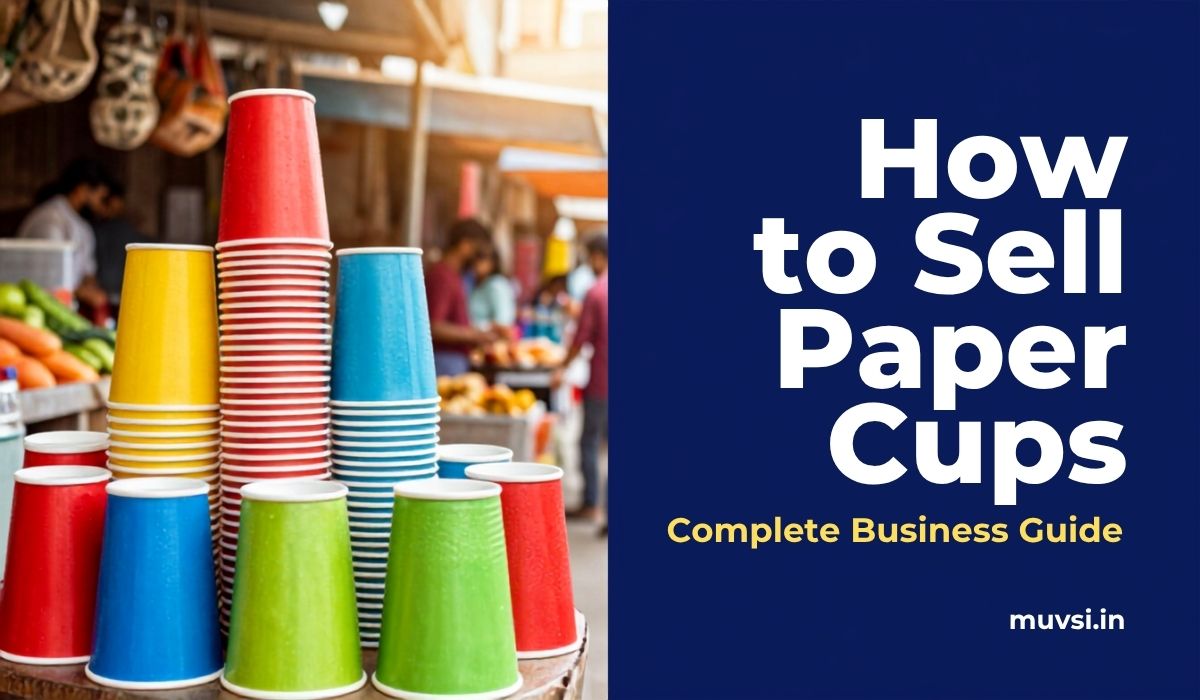
During the last two decades, I’ve had the opportunity to interact with hundreds of aspiring entrepreneurs. Some wanted to manufacture paper cups, while others planned to enter industries such as packaged foods, cleaning products, engineering, and consumer goods.
Interestingly, almost everyone asked me the same questions.
“Which machine should I buy?”
“How much investment do I need?”
“How much profit can I make?”
Very few asked what I believe is the most important question.
“How will I sell my products after manufacturing them?”
In my experience, this is where many new manufacturing businesses struggle. Producing paper cups is relatively straightforward once the machinery is installed and the production process is stabilised. Building a predictable sales pipeline, however, requires planning, persistence, and a structured marketing approach.
I’ve seen entrepreneurs invest ₹15–20 lakh in a manufacturing unit only to discover that they had no customers waiting for their products. At the same time, I’ve met business owners with modest investments who consistently run their machines because they spent time building relationships with distributors, cafés, wholesalers, and institutional buyers before they even started production.
This article isn’t about operating a paper cup making machine. It’s about building a sustainable customer acquisition system that keeps your machines running and your business profitable.
Everything I’ll share here comes from practical marketing principles that can be applied not only to paper cup manufacturing but to many B2B manufacturing businesses.
Manufacturing Doesn’t Build a Business—Marketing Does
One lesson has stayed with me throughout my career.
Machines manufacture products. Marketing builds businesses.
It sounds simple, but many entrepreneurs overlook this reality.
When planning a manufacturing business, people often spend weeks comparing machine specifications, watching YouTube videos, and negotiating prices with machinery suppliers.
Very little time is spent answering questions like:
- Who will buy my paper cups?
- How many customers do I need every month?
- Which customer segment should I target first?
- What makes my business different from hundreds of other manufacturers?
- How will customers discover my company?
Without clear answers to these questions, even the most advanced production line can remain underutilised.
Before purchasing your first machine, I recommend preparing a simple sales plan. List at least 100 potential customers in your target market and identify how you intend to approach each of them. This exercise forces you to think like a business owner rather than just a manufacturer.
Coach’s Insight
If you can identify customers before purchasing machinery, you’ve already reduced one of the biggest risks associated with starting a manufacturing business.
Understand Who Actually Buys Paper Cups
Not every customer is suitable for a new manufacturer.
One mistake I often notice is entrepreneurs trying to sell to everyone at the same time. This usually results in scattered marketing efforts and disappointing sales.
Instead, divide the market into specific customer groups.
1. Tea Stalls and Roadside Vendors
India has millions of tea stalls that consume disposable paper cups every day.
Although individual order sizes are relatively small, these customers purchase regularly and can become long-term buyers.
Many successful manufacturers begin by supplying local tea vendors before expanding into larger markets.
2. Cafés and Coffee Shops
Independent cafés, coffee chains, bakeries, and dessert outlets frequently require customised paper cups featuring their logo.
Unlike ordinary disposable cups, customised products usually command better profit margins.
If your production capability allows custom printing, this market deserves serious attention.
3. Restaurants and Fast Food Outlets
Restaurants use paper cups for beverages, takeaway orders, and home delivery.
Their priorities generally include:
- Consistent quality
- Leak-proof cups
- Timely deliveries
- Competitive pricing
Winning even a few restaurant chains can provide recurring monthly orders.
4. Catering Companies
Caterers purchase disposable products in bulk, particularly during wedding seasons, festivals, and corporate events.
Although demand may fluctuate seasonally, catering businesses can generate large-volume orders within a short period.
5. Hospitals and Healthcare Facilities
Hospitals regularly use disposable cups for drinking water, medicines, and patient care.
Most institutions prefer reliable suppliers capable of maintaining uninterrupted deliveries.
This segment may involve longer payment cycles, but it often provides stable demand.
6. Schools, Colleges and Corporate Offices
Educational institutions and offices consume thousands of disposable cups through cafeterias, vending machines, meetings, and events.
Approaching facility managers and procurement departments can open doors to recurring institutional business.
7. Wholesalers and Distributors
If someone asks me where a new manufacturer should focus initially, wholesalers are usually among my first recommendations.
Why?
Because wholesalers already have established relationships with hundreds of retailers.
Instead of trying to supply 200 tea stalls individually, supplying one distributor allows your products to reach all of them through an existing distribution network.
Your profit margin may be slightly lower, but your production remains consistent, which is often more valuable during the early stages of the business.
Choose the Right Sales Model
There is no single sales strategy that works for every paper cup manufacturer.
The right approach depends on your production capacity, financial resources, and long-term business objectives.
Direct Selling
Selling directly to cafés, restaurants, offices, and retailers allows you to earn higher margins because there are no intermediaries.
However, it also requires more time, stronger customer relationships, and an efficient delivery system.
Direct selling is suitable for entrepreneurs operating within a limited geographical area who can personally meet customers and provide regular service.
Distributor-Based Selling
In this model, distributors become your primary customers.
They purchase products in bulk and supply them to retailers, wholesalers, and commercial establishments.
Although margins are slightly lower, distributors help increase production volume while reducing your marketing efforts.
For most first-time manufacturers, I believe this is one of the fastest ways to build a stable customer base.
Institutional Sales
Supplying hospitals, schools, factories, hotels, and corporate offices can generate long-term business because these organisations consume paper cups throughout the year.
The sales cycle is usually longer, and procurement procedures may involve quotations, sample approvals, or annual contracts.
However, once you become an approved supplier, repeat business can significantly improve production planning.
Custom Printed Paper Cups
If your business can offer customised branding, you create an entirely different value proposition.
Instead of selling an ordinary paper cup, you’re helping cafés and businesses strengthen their brand identity.
Customers are generally willing to pay more for customised products when quality and service meet their expectations.
OEM Manufacturing
Another attractive option is manufacturing paper cups for companies that market products under their own brand names.
Under this arrangement, your focus remains on production while the client handles branding, sales, and distribution.
For manufacturers who prefer operational efficiency over marketing, OEM production can provide a consistent workload and predictable revenue.
How to Find Your First 10 Customers
If I were mentoring someone who had just installed a paper cup manufacturing machine, I wouldn’t tell them to print thousands of brochures or spend heavily on advertising.
Instead, I’d give them a simple assignment.
Find your first 10 paying customers.
Not 100.
Not 1,000.
Just 10.
Why?
Because those first 10 customers will teach you more about pricing, product quality, packaging, delivery expectations, payment cycles, and customer behaviour than months of theoretical research.
Your objective during the first few months isn’t rapid expansion. It’s understanding your market.
Step 1: Prepare Your Sales Kit
Before approaching any customer, ensure you have:
- Product samples in different sizes
- A printed or digital catalogue
- A business card
- A WhatsApp Business profile
- A simple company profile
- A price list
- GST details (if applicable)
Remember, you’re not just selling paper cups. You’re selling confidence that your business can supply consistently.
Step 2: Build a Prospect List
Don’t wake up every morning wondering whom to visit.
Prepare a database.
I recommend creating an Excel sheet with at least 100 prospects.
Include:
- Business name
- Contact person
- Mobile number
- Address
- Customer type
- Date visited
- Follow-up date
- Remarks
Treat your prospect list as one of your most valuable business assets.
Step 3: Visit Customers Personally
Many entrepreneurs hide behind WhatsApp messages and emails.
That rarely works in B2B manufacturing.
If your target customers are located within your city, meet them personally.
Introduce yourself.
Show your product samples.
Understand their current supplier.
Ask about their monthly consumption.
Don’t try to close every meeting with an order.
Sometimes the objective of the first visit is simply to build familiarity.
Step 4: Follow Up Consistently
Here’s something I’ve observed repeatedly.
Most sales are lost not because the product is poor but because the salesperson never follows up.
Business owners are busy.
Procurement managers are busy.
Restaurant owners are busy.
Following up professionally often separates successful manufacturers from unsuccessful ones.
Coach’s Insight
One visit rarely closes a B2B sale. Sometimes it takes three, five, or even ten conversations before a customer feels comfortable changing suppliers.
How to Sell to Tea Stalls
Tea stalls may appear to be small customers, but collectively they represent one of India’s largest markets for disposable paper cups.
If you’re targeting this segment, remember that convenience matters more than presentations.
Owners typically want:
- Consistent supply
- Affordable pricing
- Reliable quality
- On-time delivery
Carry sample packs during your visits.
Ask about their daily consumption.
Understand what size cups they use.
Offer a trial order instead of pushing for a large purchase immediately.
Once you’re supplying a tea stall consistently, competitors often find it difficult to replace you unless they offer significantly better value.
Before planning sales, calculate your target production and profit using our free calculator.
How to Sell to Cafés and Coffee Shops
Cafés buy differently.
Their purchasing decisions aren’t based only on price.
Presentation matters.
Branding matters.
Customer experience matters.
This creates an opportunity for manufacturers.
Instead of saying,
“I sell paper cups.”
Say,
“I help cafés strengthen their brand through customised paper cups.”
That changes the entire conversation.
Discuss:
- Custom printing
- Different cup sizes
- Premium finishes
- Minimum order quantities
- Delivery schedules
A café owner is often willing to pay a premium if your product improves the customer experience.
Selling to Restaurants and Quick-Service Restaurants
Restaurants generally purchase disposable products as part of a larger procurement process.
Your goal is to become a dependable supplier rather than simply offering the lowest quotation.
During meetings, focus on:
- Product quality
- Leak resistance
- Food-grade materials
- Delivery reliability
- Stock availability
Restaurant owners dislike supply interruptions.
If you consistently deliver on time, you’ll often retain customers even if another supplier offers slightly lower prices.
Selling to Wholesalers
If someone asked me to choose only one customer segment for a new paper cup manufacturing business, wholesalers would be near the top of my list.
Here’s why.
A wholesaler already has relationships with hundreds of retailers.
Instead of spending months acquiring individual customers, you can leverage an existing distribution network.
However, wholesalers evaluate suppliers differently.
They usually ask questions such as:
- Can you supply consistently?
- Do you maintain stock?
- Can you handle large orders?
- What credit period do you offer?
- How quickly can you replenish inventory?
Price is important.
But consistency is often even more important.
A distributor who runs out of stock loses business.
They therefore prefer suppliers they can depend on.
Coach’s Insight
Don’t approach wholesalers with the mindset of making one sale. Think in terms of building a long-term partnership. A distributor who places one order every month for the next five years is far more valuable than a customer who buys once and disappears.
Selling to Corporate and Institutional Buyers
Many manufacturers ignore institutional sales because they assume the process is complicated.
In reality, institutions simply purchase differently.
Potential institutional customers include:
- Corporate offices
- Manufacturing companies
- Educational institutions
- Hospitals
- Hotels
- Event organisers
Most organisations purchase through procurement departments.
Before contacting them, prepare:
- Company profile
- GST certificate
- Product catalogue
- Sample kit
- Quotation format
Be prepared for longer decision-making cycles.
Institutional buyers often evaluate suppliers based on quality, documentation, pricing, and delivery capability rather than emotional sales pitches.
Winning just a handful of institutional clients can significantly improve the stability of your business because many of these organisations place recurring orders throughout the year.
Build a Brand, Not Just a Manufacturing Unit
One of the biggest misconceptions among new manufacturers is that branding is only for large companies.
I disagree.
Whether you manufacture 10,000 paper cups a day or 500,000, your customers still want to know one thing:
“Why should I buy from you instead of another supplier?”
That’s your brand.
A strong brand isn’t created by an expensive logo or fancy packaging. It’s built through consistency, professionalism, and trust.
When I work with small businesses, I encourage them to invest in a few branding essentials from the very beginning.
These include:
- A memorable business name
- A professionally designed logo
- Consistent packaging
- A simple product catalogue
- A company brochure
- Business cards
- A professional email address
- A website
- A Google Business Profile
These small investments make your business look credible, especially when dealing with wholesalers, distributors, and institutional buyers.
Coach’s Insight
Customers rarely compare only prices. They compare confidence. The manufacturer who appears organised, responsive, and reliable usually wins more business than someone offering a slightly lower price.
Price Your Products for Profit, Not Just Sales
Pricing is one of the areas where new manufacturers make costly mistakes.
Many believe that the quickest way to attract customers is by offering the lowest price.
In reality, this strategy often creates three problems:
- Lower profit margins
- Difficulty in increasing prices later
- A perception that your products are of lower quality
Instead of asking, “How cheaply can I sell?”, ask yourself:
“How can I create more value for my customers?”
For example, can you offer:
- Faster delivery?
- Better packaging?
- Consistent stock availability?
- Custom printing?
- Flexible order quantities?
- Reliable after-sales support?
These value-added services often justify a better selling price.
Create Different Price Levels
Avoid maintaining a single price for every customer.
Instead, create separate pricing structures for:
- Retail buyers
- Wholesalers
- Distributors
- Institutional customers
- OEM clients
This gives you flexibility while protecting your overall profitability.
Another point I always emphasise is understanding your true production cost.
Before quoting any customer, calculate:
- Raw material cost
- Labour cost
- Electricity
- Packaging
- Transportation
- Overheads
- Desired profit margin
Only then should you finalise your selling price.
Your Website Should Be Your Best Salesperson
Many small manufacturers believe they don’t need a website because their business operates offline.
I see it differently.
Today, almost every serious buyer searches online before contacting a supplier.
If your business doesn’t have a website, you’re missing opportunities every single day.
Your website doesn’t need to be complicated.
It should simply answer the questions every buyer has.
Include pages such as:
- About Us
- Products
- Manufacturing Facility
- Industries We Serve
- Custom Printed Paper Cups
- Contact Information
- Inquiry Form
If possible, include genuine photographs of your factory, machinery, production process, and finished products.
Authenticity builds trust.
Check: How to Make a Website
Use SEO to Generate Free B2B Leads
Search Engine Optimisation (SEO) is one of the most cost-effective ways to generate enquiries over the long term.
Unlike paid advertising, SEO continues to bring visitors even after the content has been published.
If I were building the website of a paper cup manufacturer, I’d create pages targeting searches such as:
- Paper Cup Manufacturer in Kolkata
- Paper Cup Supplier in West Bengal
- Custom Printed Paper Cups
- Disposable Paper Cups Wholesale
- Coffee Cup Manufacturer in India
- Paper Cup Manufacturer Near Me
These pages help your business appear when buyers actively search for suppliers.
Another effective strategy is publishing helpful articles that answer buyers’ questions.
For example:
- How to Choose a Paper Cup Supplier
- Custom Printed Paper Cups for Cafés
- Paper Cup Sizes Explained
- Benefits of Food-Grade Paper Cups
Informative content establishes your authority while improving your website’s visibility in search engines.
Optimise Your Google Business Profile
If your manufacturing unit serves customers within a specific region, creating a Google Business Profile is essential.
A well-optimised profile can generate enquiries without spending money on advertising.
Complete every section of your profile.
Include:
- Business description
- Product categories
- Business hours
- Contact details
- Website
- Factory photographs
- Product photographs
Encourage satisfied customers to leave genuine reviews.
Positive reviews improve both credibility and local search visibility.
Should You List on IndiaMART and TradeIndia?
My answer is yes—but with realistic expectations.
B2B marketplaces can generate enquiries, but they shouldn’t become your only source of customers.
Use them as one component of your marketing strategy.
To improve your results:
- Respond to enquiries quickly.
- Upload high-quality product photographs.
- Clearly mention product specifications.
- Keep pricing realistic.
- Follow up consistently.
Remember that many enquiries may simply be price comparisons.
Learn to qualify leads before investing too much time.
Use WhatsApp Business as a Sales Tool
Most of your customers already use WhatsApp.
Instead of relying on a personal account, create a dedicated WhatsApp Business profile.
Use its features effectively:
- Product catalogue
- Business description
- Quick replies
- Labels for customer management
- Greeting messages
- Away messages
I also recommend maintaining separate broadcast lists for:
- Distributors
- Retail customers
- Institutional buyers
- Prospective customers
Whenever you launch a new product or have promotional offers, you can communicate with the right audience without creating unnecessary noise.
Don’t Wait for Customers to Find You
One of the biggest differences I observe between successful manufacturers and struggling ones is their approach to customer acquisition.
Unsuccessful businesses wait.
Successful businesses prospect.
Every week, challenge yourself to:
- Visit new customers.
- Call prospective buyers.
- Follow up on previous enquiries.
- Ask existing customers for referrals.
- Attend local trade events.
- Connect with distributors.
Sales momentum is created through consistent activity, not occasional bursts of enthusiasm.
Coach’s Insight
In manufacturing, the owner is often the first salesperson. The sooner you accept that role, the faster your business will grow.
Customer Retention: The Secret to Long-Term Growth
Acquiring a new customer is expensive. Keeping an existing customer is usually far more profitable.
Unfortunately, many manufacturers spend all their energy finding new buyers while ignoring the customers they already have. Over time, this creates an endless cycle of replacing lost business instead of building a stable customer base.
In my experience, the most successful manufacturers don’t necessarily have the largest marketing budgets. They simply give their customers fewer reasons to switch suppliers.
Here are a few practices that have helped businesses retain customers for years:
Deliver on Time
Restaurants, tea stalls, wholesalers, and distributors operate on tight schedules. A delayed delivery can disrupt their business and force them to buy from someone else.
Make delivery reliability one of your biggest competitive advantages.
Maintain Consistent Quality
Customers expect every batch to match the previous one.
A sudden change in paper quality, cup dimensions, printing, or finishing can damage trust that took months to build.
Consistency creates confidence.
Stay in Touch
Don’t contact customers only when you want an order.
Call them occasionally to ask:
- Are they satisfied with the product?
- Have they faced any issues?
- Are there any upcoming requirements?
- Can you help them in any way?
These conversations strengthen relationships and often lead to repeat business.
Handle Complaints Professionally
Every business receives complaints.
The difference lies in how they’re handled.
Never argue with customers.
Listen carefully.
Investigate the issue.
Offer a practical solution.
A complaint handled professionally often creates stronger customer loyalty than a transaction where nothing went wrong.
Coach’s Insight
Your first sale proves that your marketing works. Your second, third, and fourth sales prove that your business deserves to grow.
Expand Beyond Your Local Market
Once you’ve established a stable customer base in your city, the next logical step is geographical expansion.
Don’t try to sell across India immediately.
Grow systematically.
I usually recommend the following sequence:
- Your city
- Nearby districts
- Your state
- Neighbouring states
- Pan-India distribution
Each stage teaches valuable lessons about logistics, inventory management, and customer service.
As your business expands, consider appointing:
- Regional distributors
- Super stockists
- State-wise dealers
- Carrying and forwarding agents
This allows you to scale without managing every customer directly.
Can You Export Paper Cups?
Yes, although I generally advise first-time entrepreneurs to build a strong domestic business before exploring exports.
Once your production quality, documentation, and operations are well established, you can evaluate international opportunities.
Possible export channels include:
- Merchant exporters
- Export houses
- International B2B marketplaces
- Overseas distributors
Remember that export business involves additional requirements such as product certifications, export documentation, shipping arrangements, and international payment procedures.
Treat exports as a long-term growth strategy rather than your initial source of revenue.
Common Marketing Mistakes I See Paper Cup Manufacturers Make
During my career, I’ve observed several mistakes repeated by new manufacturers across different industries.
Fortunately, most of them are avoidable.
Waiting for Customers to Come
Simply installing a machine doesn’t create demand.
Every successful manufacturing business actively pursues customers.
Competing Only on Price
Price matters.
But trust, quality, consistency, and service matter even more.
If your only competitive advantage is being cheaper, someone else will eventually become even cheaper.
Depending on One Large Customer
Landing a major buyer is exciting.
Depending entirely on that buyer is risky.
Diversify your customer base so that losing one account doesn’t threaten your business.
Ignoring Digital Marketing
Many manufacturers still believe websites and online marketing are only for software companies or online stores.
That’s no longer true.
Today’s procurement managers, distributors, and business owners search online before contacting suppliers.
If your competitors are visible online and you aren’t, you’re losing enquiries you never even knew existed.
Poor Follow-Up
Some entrepreneurs give up after one phone call.
Professional selling doesn’t work that way.
Follow up politely and consistently.
Many customers purchase weeks—or even months—after the first conversation.
Not Building a Brand
A manufacturer with a recognisable brand is easier to remember, easier to recommend, and often easier to trust.
Brand building isn’t a luxury.
It’s a long-term investment.
My 90-Day Marketing Plan for a New Paper Cup Manufacturer
If I were starting a paper cup manufacturing business today, this is roughly how I’d spend my first three months.
Month 1: Build the Foundation
Focus on preparing your business for the market.
Complete the essentials:
- Finalise your product range.
- Create your company logo and branding.
- Print business cards and brochures.
- Build a simple professional website.
- Create a Google Business Profile.
- Set up WhatsApp Business.
- Prepare product samples.
Don’t worry about rapid sales yet.
Your objective is to build credibility.
Month 2: Meet the Market
Now it’s time to leave the factory.
Every day, aim to meet new prospects.
Visit:
- Tea stalls
- Cafés
- Restaurants
- Disposable product wholesalers
- Packaging distributors
- Caterers
- Corporate offices
Collect information.
Understand pricing.
Observe competitors.
Refine your sales pitch.
Remember, every conversation teaches you something.
Month 3: Build Momentum
By now, you should have your first customers.
Your focus shifts from finding customers to building a repeatable sales system.
During this stage:
- Follow up with existing prospects.
- Ask satisfied customers for referrals.
- Add new distributors.
- Improve your online visibility.
- Publish helpful content on your website.
- Introduce customised paper cups if feasible.
Marketing should become a routine activity rather than something you do only when sales decline.
Related Guides
If you’re planning to start a paper cup manufacturing business, these resources may also help:
- How to Start a Paper Cup Manufacturing Business
- Paper Cup Making Machine Price
- Paper Cup Manufacturing Project
- Paper Cup Machine Suppliers
Reading these guides alongside this article will give you a complete understanding of the investment, production process, profitability, and day-to-day operations of the business.
Work With Me
If you’ve read this far, you’re probably serious about building a successful manufacturing business rather than simply purchasing a machine.
That’s exactly the kind of entrepreneur I enjoy working with.
As the Founder and Lead Business Coach at MUVSI, I work with aspiring entrepreneurs and MSMEs to help them make informed business decisions and develop practical marketing strategies.
While I don’t manufacture paper cups or sell machinery, I can help you avoid costly mistakes that many first-time entrepreneurs make.
My consulting services include:
- Business idea evaluation
- Market validation
- Go-to-market strategy
- Customer acquisition planning
- Distributor development
- Digital marketing strategy
- Website and SEO planning
- Personal branding for entrepreneurs
- Business growth strategy
If you’d like personalised guidance tailored to your business, I’d be happy to work with you.
👉 Book a One-on-One Business Strategy Session
Whether you’re planning your first manufacturing unit or looking to grow an existing business, a focused consultation can save months of trial and error.
(Replace this button with your booking page, Calendly, TidyCal, or your preferred appointment system.)
My Final Advice
If I were starting a paper cup manufacturing business today, I wouldn’t spend weeks comparing machines.
- Spend those weeks understanding my customers.
- Identify at least 100 prospective buyers before placing my machinery order.
- Meet wholesalers before negotiating with machine suppliers.
- Build a simple website before my first production run.
- Prepare my sales strategy before calculating production capacity.
Because after working with entrepreneurs for many years, one lesson has become crystal clear to me:
Manufacturing is a process. Marketing is a system.
Machines produce paper cups.
People buy businesses they trust.
If you focus on building relationships, delivering consistent quality, and solving customer problems instead of simply selling products, your manufacturing unit has a far greater chance of becoming a sustainable and profitable enterprise.
I wish you every success in your entrepreneurial journey.

Rupak Chakrabarty is the Founder and Lead Business Coach at MUVSI. With over two decades of experience in entrepreneurship, marketing, and business consulting, he helps aspiring entrepreneurs and MSMEs build profitable, market-driven businesses. His expertise includes business planning, B2B marketing, customer acquisition, and digital growth strategies.