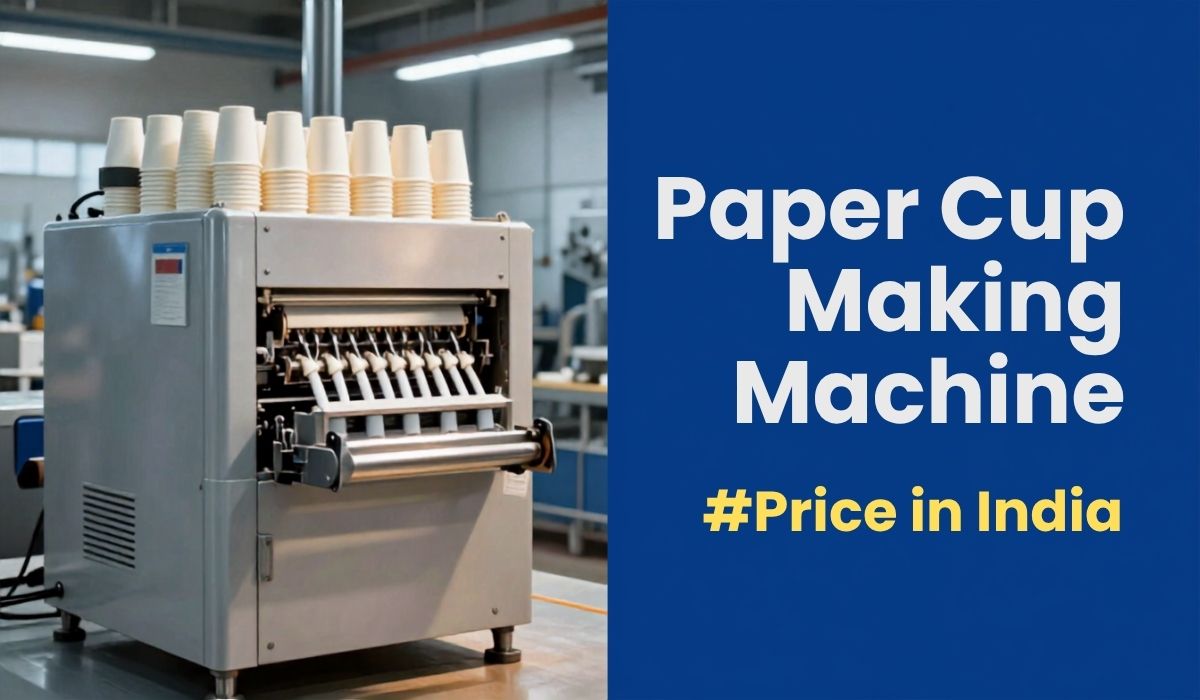
Looking for a Paper Cup Making Machine? Read This Before You Invest
If you’ve searched online for the price of a paper cup making machine, you’ve probably come across dozens of websites quoting completely different figures.
One supplier advertises a machine for ₹3.5 lakh, another quotes ₹6 lakh, while premium manufacturers ask ₹10 lakh or more. At first glance, they all seem to produce paper cups, so why is there such a huge difference in price?
The answer is simple.
You’re not comparing the same machine.
The cost of a paper cup making machine depends on several factors, including production capacity, automation level, cup size compatibility, build quality, electrical components, after-sales support, and even the country where the machine is manufactured.
Many first-time entrepreneurs make the mistake of comparing only the purchase price. Unfortunately, the cheapest machine is not always the most economical investment. A machine that produces fewer cups, consumes more electricity, breaks down frequently, or lacks reliable service support can become far more expensive over its lifetime than a higher-priced machine with better performance.
That’s why I created this guide.
Instead of promoting a particular manufacturer, my objective is to help you understand what influences machine prices, what features actually matter, and how to choose a machine that matches your production goals and investment budget.
Whether you’re planning to start a small paper cup manufacturing unit or invest in a large commercial factory, this guide will help you make a more informed purchasing decision.
Paper Cup Making Machine Price in India
The table below provides a general price range based on current market trends. Actual prices vary depending on the manufacturer, production capacity, included accessories, and optional features.
Machine Type | Production Capacity | Approximate Price |
|---|---|---|
Manual Paper Cup Machine | Small-scale production | ₹25,000 – ₹80,000 |
Semi-Automatic Machine | 35–50 cups/minute | ₹2.5 – ₹4.5 lakh |
Entry-Level Automatic Machine | 50–70 cups/minute | ₹3.5 – ₹5 lakh |
Standard Fully Automatic Machine | 80–100 cups/minute | ₹5 – ₹7.5 lakh |
High-Speed Automatic Machine | 120–160 cups/minute | ₹8 – ₹12 lakh |
Industrial High-Capacity Machine | 160+ cups/minute | ₹12 lakh onwards |
Note: Prices are indicative and may vary based on machine configuration, supplier location, warranty, installation, and applicable GST.
Coach’s Perspective
One question I often receive from entrepreneurs is:
“Can I save money by buying the cheapest machine available?”
My answer is usually another question.
How many cups do you expect to sell every month?
Buying a machine without estimating your production requirements is like purchasing a truck before knowing what you’re going to transport.
If your monthly demand is modest, a mid-range automatic machine may offer a much better return on investment than an expensive high-speed model that remains underutilised.
Remember, profits come from selling paper cups—not from owning the biggest machine in the market.
What Determines the Paper Cup Making Machine Price?
One of the biggest reasons entrepreneurs get confused while comparing the paper cup making machine price is that two machines may look almost identical, but have a price difference of several lakhs.
This isn’t because one supplier is charging more—it is usually because the machines differ significantly in terms of production capacity, technology, components, and after-sales support.
Before requesting quotations from suppliers, it’s important to understand what actually influences the price.
1. Automation Level
The level of automation is the biggest factor affecting the paper cup making machine price.
Machine Type | Typical Price Range | Best For |
|---|---|---|
Manual | ₹25,000 – ₹80,000 | Training, very small production |
Semi-Automatic | ₹2.5 – ₹4.5 lakh | Small businesses |
Fully Automatic | ₹5 – ₹8 lakh | Most MSMEs |
High-Speed Automatic | ₹8 – ₹12 lakh+ | Large-scale production |
A fully automatic machine performs paper feeding, bottom sealing, side sealing, curling, cup ejection, and counting with minimal operator intervention. As automation increases, labour requirements decrease while production consistency improves.
Spending ₹7 lakh on a machine?
Find out whether your investment is financially viable using our Manufacturing Profitability Calculator.
2. Production Capacity
A machine capable of producing 50 cups per minute naturally costs less than one producing 120–160 cups per minute.
Higher-capacity machines generally include:
- Better drive systems
- Faster indexing
- Improved sensors
- Higher-quality bearings
- Stronger machine frames
For example:
Capacity | Approximate Machine Price |
|---|---|
50–60 cups/minute | ₹3.5 – ₹5 lakh |
80–100 cups/minute | ₹5 – ₹7 lakh |
120–160 cups/minute | ₹8 – ₹12 lakh |
Buying a larger machine only makes sense if you have enough demand to utilize its production capacity. Running an expensive machine at 20–30% capacity increases your cost per cup instead of reducing it.
3. Cup Size Compatibility
Another factor affecting the paper cup making machine price is the range of cup sizes the machine can produce.
Some entry-level machines are designed for only one or two cup sizes, while premium models support multiple dies and can manufacture:
- 65 ml
- 90 ml
- 150 ml
- 200 ml
- 250 ml
- 300 ml
Machines with greater flexibility usually cost more because they allow manufacturers to serve different customer segments without investing in additional equipment.
4. Indian vs Imported Machine
Many buyers ask whether they should purchase an Indian-made machine or an imported model.
Both have advantages.
Indian Machines
Pros
- Lower purchase price
- Faster service support
- Spare parts readily available
- Lower maintenance costs
Cons
- Quality varies between manufacturers
- Some entry-level models have lower production speeds
Imported Machines
Pros
- Advanced automation
- Higher production speeds
- Better finish on premium models
Cons
- Higher purchase price
- Expensive spare parts
- Longer service turnaround
- Import and logistics costs
Unless you have export-scale production requirements, a reliable Indian machine often provides better value because maintenance and technical support are easier to obtain.
5. Machine Components and Technology
Two machines producing the same number of cups per minute may still have different prices because of the components used.
Premium machines often include:
- PLC control systems
- Servo motors
- Ultrasonic sealing technology
- Automatic lubrication
- Touch-screen control panels
- Digital fault diagnosis
- Energy-efficient motors
These features improve reliability, reduce downtime, and enhance production consistency, but they also increase the paper cup making machine price.
Coach’s Perspective
When entrepreneurs contact me, they often ask,
“Which machine gives the highest profit?”
I don’t think that’s the right question.
A better question is:
“Which machine matches my expected sales over the next 12 months?”
If your current market can absorb 30,000 cups a day, investing in a machine capable of producing 100,000 cups a day may not improve your profitability. In many cases, a mid-range fully automatic machine with dependable after-sales support delivers a better return on investment than the most expensive model available.
Remember, the paper cup making machine price is only one part of your investment. Working capital, raw materials, electricity, labour, maintenance, and marketing will continue to affect your business long after you’ve paid for the machine.
Which Paper Cup Making Machine Should You Buy?
Now that you understand what affects the paper cup making machine price, the next question is even more important:
Which machine is right for your business?
The answer depends on your production target, investment budget, and expected customer demand—not simply the machine’s maximum capacity.
Here’s my recommendation for different business stages.
Budget Below ₹5 Lakh
If you’re entering the paper cup manufacturing industry for the first time and have a limited budget, consider an entry-level automatic machine with a production capacity of around 50–70 cups per minute.
Suitable for:
- New entrepreneurs
- Local market suppliers
- Tea stalls and wholesalers
- Small distributors
Expected Paper Cup Making Machine Price: ₹3.5 lakh – ₹5 lakh
At this stage, your priority should be learning the business, developing a customer base, and maintaining consistent quality rather than chasing maximum production.
Budget Between ₹5 Lakh and ₹8 Lakh
This is the segment where most MSMEs invest.
Machines in this category generally offer:
- 80–100 cups per minute
- Better automation
- Improved production stability
- Lower rejection rates
- Better resale value
Expected Paper Cup Making Machine Price: ₹5 lakh – ₹7.5 lakh
If you already have distributors or institutional buyers, this category usually provides the best balance between investment and production capacity.
Budget Above ₹10 Lakh
High-speed automatic machines are designed for commercial production where volume is the primary objective.
These machines typically produce:
- 120–160+ cups per minute
- Multiple cup sizes
- Better energy efficiency
- Higher automation
- Reduced labour dependency
Expected Paper Cup Making Machine Price: ₹8 lakh – ₹12 lakh or more
This category is suitable only if you have sufficient working capital and a reliable sales network capable of absorbing large production volumes.
Hidden Costs Most Buyers Ignore
Many entrepreneurs compare only the quoted paper cup making machine price, but the actual investment is usually much higher.
Before purchasing a machine, prepare a complete budget that includes the following expenses.
Expense | Estimated Cost |
|---|---|
Machine Transportation | ₹20,000 – ₹80,000 |
Installation & Commissioning | ₹25,000 – ₹1 lakh |
GST | As applicable |
Air Compressor | ₹40,000 – ₹1 lakh |
Electrical Wiring & Panel | ₹50,000 – ₹2 lakh |
Cup Dies (Additional Sizes) | ₹20,000 – ₹80,000 each |
Initial Raw Material | ₹2 lakh – ₹5 lakh |
Packaging Materials | ₹25,000 – ₹1 lakh |
Working Capital | ₹3 lakh – ₹8 lakh |
These costs can significantly increase the overall investment, so don’t base your decision solely on the machine’s purchase price.
Coach’s Perspective
One of the biggest mistakes I see is entrepreneurs spending their entire budget on machinery. After installation, they realize they still need money for raw materials, electricity, salaries, and marketing. A machine without working capital cannot generate revenue. Whenever you evaluate the paper cup making machine price, calculate the total setup cost, not just the invoice value.
Features to Compare Before Buying a Paper Cup Making Machine
Price is important, but it should never be the only deciding factor.
Before finalizing a supplier, compare the following features:
- Production speed (cups per minute)
- Supported cup sizes
- Power consumption
- PLC control system
- Servo motor availability
- Ultrasonic sealing technology
- Machine weight and build quality
- Ease of operation
- Availability of spare parts
- Warranty period
- Installation support
- Operator training
- Annual maintenance requirements
- Customer reviews and testimonials
Preparing a comparison sheet for multiple suppliers will help you make a more informed decision and avoid expensive mistakes.
Questions to Ask the Machine Supplier
Before paying an advance, ask every supplier these questions:
- What is the actual production capacity during an 8-hour shift?
- What cup sizes can the machine manufacture?
- Are dies included in the quoted price?
- Is installation included?
- How long is the warranty?
- What is the response time for service calls?
- Are spare parts readily available in India?
- Will operator training be provided?
- What is the average power consumption?
- Can I visit an existing customer’s factory to see the machine in operation?
A genuine manufacturer will usually answer these questions confidently and provide supporting information where possible.
Should You Buy a New or Used Paper Cup Making Machine?
Buying a used machine may appear attractive because of the lower initial investment. However, it’s important to inspect the machine carefully before making a decision.
A new machine generally offers:
- Manufacturer’s warranty
- Better production efficiency
- Latest technology
- Lower maintenance costs
- Reliable after-sales support
A used machine may help reduce upfront investment but can involve higher maintenance expenses, limited warranty, and uncertainty about previous usage.
Unless you’re purchasing from a trusted source and the machine has been thoroughly inspected, first-time entrepreneurs are usually better off investing in a new machine from a reputable manufacturer.
Leading Paper Cup Making Machine Manufacturers in India
India has several established manufacturers offering paper cup-making machines for various production capacities and budgets. While pricing is an important consideration, don’t choose a supplier based on cost alone. Compare after-sales support, spare part availability, customer reviews, and installation assistance before making your final decision.
Some well-known manufacturers and suppliers include:
Manufacturer | Known For |
|---|---|
Nessco India | High-speed automatic paper cup machines and export-quality equipment |
Suman Enterprise | Automatic paper cup making machines for MSMEs |
Sahil Graphics | Multiple machine models with nationwide supply |
Swastik Paper Machines | Entry-level and mid-range automatic machines |
Jain Industries | Paper cup and disposable product machinery |
Dushyant Paper Machines | Customised paper cup production lines |
Before placing an order, request a live machine demonstration or visit an existing installation if possible. Seeing a machine in actual production provides a much clearer picture than brochures or online videos.
Can You Get a Loan to Buy a Paper Cup Making Machine?
Yes. Many entrepreneurs finance their machinery through bank loans or MSME lending schemes.
Depending on your eligibility and business structure, you may explore:
- MSME business loans
- Term loans from commercial banks
- Equipment financing
- Loans from NBFCs
- Government-supported credit schemes for small businesses
Lenders generally evaluate your project cost, repayment capacity, and business plan before approving finance.
If you’re planning to purchase a machine on loan, include not only the price of the paper cup-making machine but also working capital, raw materials, and installation costs in your project report. This will help you estimate the actual funding requirement more accurately.
Is a Paper Cup Making Machine a Good Investment?
From a business perspective, a paper cup making machine can be a worthwhile investment if there is consistent demand for your products.
The machine itself does not generate profits—your customer network does.
Before investing, make sure you have answers to these questions:
- Who will buy your paper cups?
- How many cups can you realistically sell each month?
- Do you have enough working capital to operate for the first few months?
- Have you compared at least three machinery suppliers?
- Do you understand the total setup cost beyond the machine price?
If the answer to most of these questions is “yes,” you’re in a much stronger position to make an informed investment.
Coach’s Perspective
In my experience, entrepreneurs spend weeks comparing the paper cup making machine price but only a few hours planning how they’ll sell the finished cups. I’d reverse that approach. Spend as much time building your customer pipeline as you do evaluating machinery. A reliable order book will always deliver a better return than simply owning a larger or more expensive machine.
Related Guides
If you’re planning to start a paper cup manufacturing business, these resources may also help:
- How to Start a Paper Cup Manufacturing Business
- Paper Cup Manufacturing Project Report
- How to Sell Paper Cups
- Paper Plate Machine Suppliers
Reading these guides alongside this article will give you a complete understanding of the investment, production process, profitability, and day-to-day operations of the business.
Frequently Asked Questions
What is the average paper cup making machine price in India?
The paper cup making machine price typically ranges from ₹3.5 lakh to ₹12 lakh or more, depending on the automation level, production capacity, brand, and machine features.
Which machine is best for beginners?
For most first-time entrepreneurs, a fully automatic machine producing 50–70 cups per minute offers a good balance between investment and production capacity.
How many paper cups can an automatic machine produce?
Most standard automatic machines produce between 50 and 120 cups per minute, while high-speed models can exceed 160 cups per minute.
Does the machine price include installation?
Not always. Some suppliers include installation and operator training, while others charge separately. Always confirm this before placing your order.
How much electricity does a paper cup making machine consume?
Power consumption varies by machine size and capacity. Check the technical specifications provided by the manufacturer and ensure your factory has an appropriate three-phase electrical connection.
Can one machine manufacture different cup sizes?
Yes. Many machines support multiple cup sizes, although you may need to purchase additional dies for each size.
Should I buy an imported or Indian machine?
For most MSMEs, a quality Indian-made machine offers better service support, easier access to spare parts, and lower maintenance costs. Imported machines may be suitable for businesses requiring very high production volumes or advanced automation.
What is the total investment required apart from the machine?
In addition to the paper cup making machine price, you’ll need to budget for transportation, installation, electrical setup, air compressor, dies, raw materials, labour, packaging, and working capital.
How long does a paper cup making machine last?
With proper maintenance and timely servicing, a quality machine can operate efficiently for many years. The lifespan depends on usage, operating conditions, and preventive maintenance.
Is paper cup manufacturing still a profitable business?
Yes, provided you maintain product quality, control operating costs, and build a reliable customer base. Success depends on consistent sales and efficient production rather than the machine alone.

Rupak Chakrabarty is the Founder and Lead Business Coach at MUVSI. With over two decades of experience in entrepreneurship, marketing, and business consulting, he helps aspiring entrepreneurs and MSMEs build profitable, market-driven businesses. His expertise includes business planning, B2B marketing, customer acquisition, and digital growth strategies.